Yes, there are sharks in New Zealand, and quite a few species. The country sits in cool, productive southern waters that support great white sharks, makos, blue sharks, bronze whalers, sevengills and dozens of smaller species, from the shallow harbours of Northland to the sub-Antarctic swell off Stewart Island. If you are asking “are there sharks in New Zealand” because you are planning to surf Raglan, swim at Mount Maunganui or kayak the Abel Tasman coast, the honest answer is that sharks are a normal part of the ecosystem here and encounters that hurt people are genuinely rare.
New Zealand has recorded only a small number of fatal shark incidents since records began in the 1800s. Widely reported tallies put it at roughly a dozen over more than 170 years, in a country where millions of people swim, surf, dive and spearfish every summer. Most years pass with no serious bite at all. You are far more likely to be hurt by a rip current, a cold-water shock or a slip on wet rocks than by any shark.
This guide names the species that actually live here, explains where and when people meet them, gives a straight assessment of the risk and sets out the practical habits that keep that risk tiny. It also covers the other marine wildlife worth knowing about, because the sea lion that waddles up your Otago beach is a more realistic headache than a great white.
Contents
- Which Shark Species Live in New Zealand Waters?
- New Zealand Shark Species at a Glance
- Where and When Do Shark Encounters Happen?
- How Dangerous Are Sharks in New Zealand, Really?
- Practical Safety Tips for Swimmers, Surfers and Divers
- What to Do if Someone Is Bitten
- Other Marine Wildlife Worth Knowing About
- How New Zealand Compares With Other Wildlife Destinations
- Frequently Asked Questions
- Bottom Line
Which Shark Species Live in New Zealand Waters?
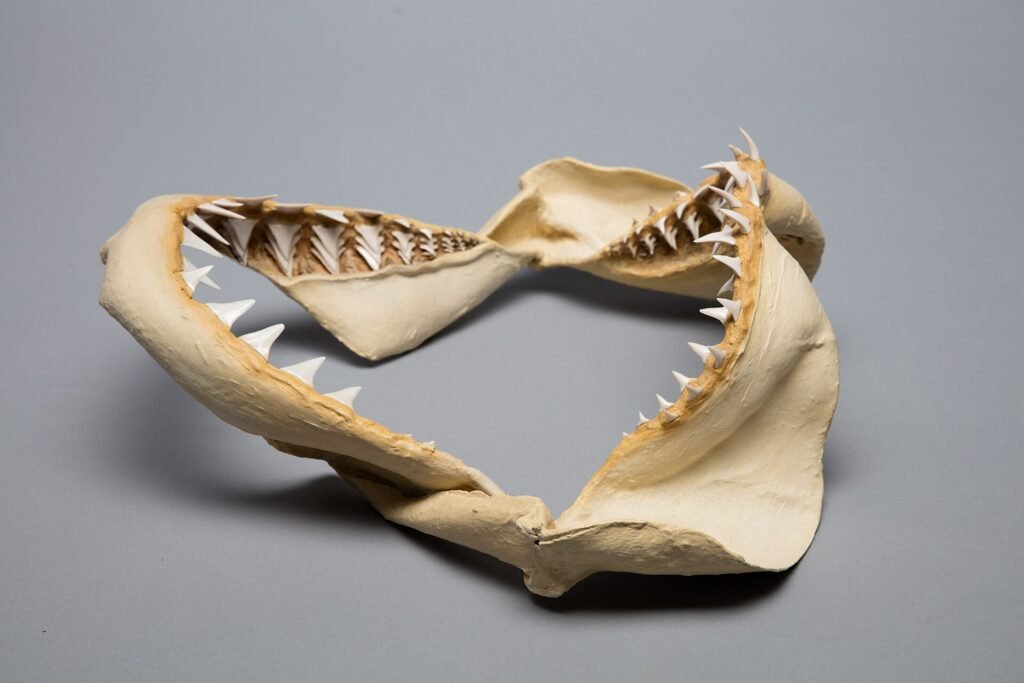
New Zealand’s Department of Conservation (DOC) and NIWA, the national water and atmospheric research institute, list well over sixty shark species in the country’s exclusive economic zone. Most are small, deep-water or offshore animals you will never see. A handful are large coastal species that swimmers and surfers occasionally encounter.
Great white shark (Carcharodon carcharias)
New Zealand has a resident population of great whites, best known around Stewart Island and the Titi (Muttonbird) Islands in the far south, the Chatham Islands, the Kaikoura coast and parts of Otago. Tagging work has shown these animals migrate thousands of kilometres to the tropical Pacific and back. Great whites have been fully protected in New Zealand waters since 2007, so it is illegal to catch, keep or harm one. They are the species involved in most of the country’s serious incidents, including the widely reported fatalities at Muriwai Beach near Auckland and Waihi Beach in the Bay of Plenty.
Shortfin mako (Isurus oxyrinchus)
The fastest shark in the world is common in New Zealand’s offshore waters, especially the warm East Auckland Current that runs down the North Island’s east coast in summer. Makos are prized by game fishers out of the Bay of Islands and Whakatane and are rarely seen close to beaches.
Bronze whaler (Carcharhinus brachyurus)
Also called the copper shark, this is the large shark you are most likely to meet in the surf zone. Bronze whalers come into shallow, warm bays in summer to feed on schooling fish and to pup. They are regularly spotted from surf lifesaving towers along Northland, Auckland’s west coast, the Bay of Plenty and Hawke’s Bay, and they prompt most of the “beach closed” announcements you will read about in the news. Bites are very uncommon and usually minor.
Broadnose sevengill shark (Notorynchus cepedianus)
A large, primitive-looking shark with seven gill slits instead of five. Sevengills live in harbours, estuaries and shallow coastal water around much of the country and are a familiar sight to spearfishers and kayak anglers. They are generally placid but should be treated with respect because of their size.
New Zealand Shark Species at a Glance
| Species | Where you might see it | Risk to swimmers and surfers |
|---|---|---|
| Great white shark | Stewart Island, Chatham Islands, Kaikoura, Otago, occasionally North Island beaches | Low but the species behind most serious incidents |
| Bronze whaler | Shallow bays and surf beaches nationwide in summer | Low; most common cause of beach closures |
| Shortfin mako | Offshore, North Island east coast | Very low near shore |
| Blue shark | Open ocean, pelagic dive trips | Very low near shore |
| Broadnose sevengill | Harbours and estuaries, South Island coasts | Low; large but usually placid |
| Smooth hammerhead | Northern harbours and bays in summer | Very low |
| School shark, rig, spiny dogfish | Sandy harbours and estuaries nationwide | Negligible |
| Tiger shark, thresher, porbeagle | Rare, mostly far north offshore | Very low; sightings uncommon |
Where and When Do Shark Encounters Happen?
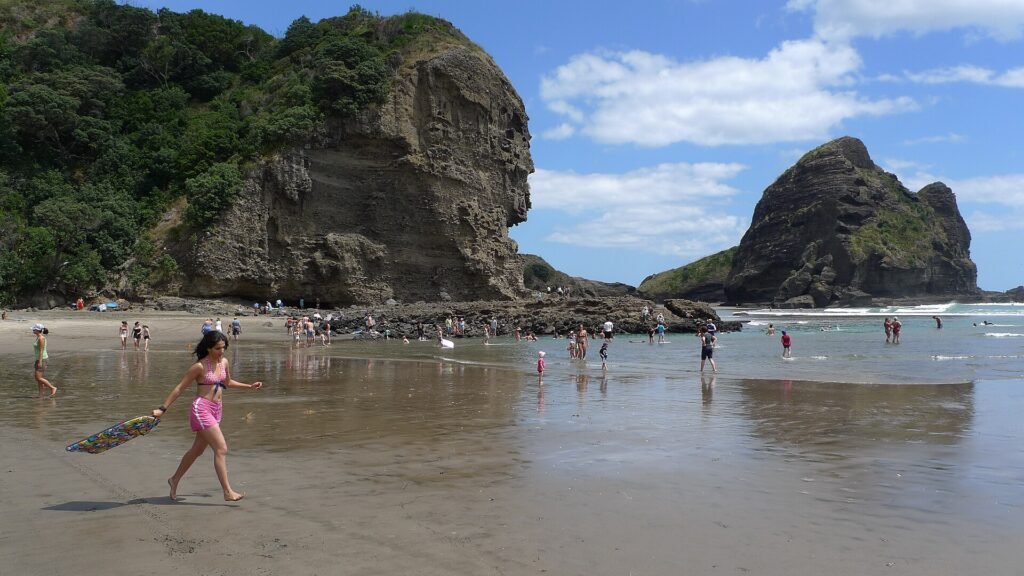
Almost every notable encounter in New Zealand follows the same pattern: summer, a popular beach, warm water, and a surfer, swimmer or spearfisher in or beyond the surf zone. The shark season runs roughly from December to March, when water temperatures peak and bait fish push inshore.
Hotspots that regularly make the news
- Auckland’s west coast (Muriwai, Piha, Bethells): big surf beaches with deep gutters and a history of great white sightings.
- Bay of Plenty (Waihi Beach, Mount Maunganui, Papamoa): bronze whalers patrol the shallows in summer and lifeguards close beaches several times a season.
- Northland and the Hauraki Gulf: hammerheads and bronze whalers in harbours; sevengills around the islands.
- Dunedin’s St Clair and St Kilda: a cluster of historic incidents in the 1960s led to shark nets that were finally removed in 2011 after years of debate.
- Stewart Island and Bluff: the great white capital, where licensed cage-diving operations run from the port at Bluff.
How Dangerous Are Sharks in New Zealand, Really?
Put bluntly: not very. DOC’s own guidance describes shark attacks as “extremely rare”, and in a typical year the country records a handful of minor incidents, sometimes none. Serious or fatal bites are separated by years, often by a decade or more.
Compare that with drowning. Water Safety New Zealand reports dozens of preventable drownings every year across beaches, rivers and lakes. Rip currents on the west coast surf beaches are the single biggest hazard a visitor faces in the water, which is exactly why Surf Life Saving New Zealand puts so much effort into patrolled areas.
Practical Safety Tips for Swimmers, Surfers and Divers
The following habits are what local lifeguards and dive clubs recommend. They reduce an already small risk to something close to zero.
- Swim at patrolled beaches, between the flags. Lifeguards watch for sharks as well as rips and will clear the water fast if one appears.
- Avoid dawn, dusk and night. This is when most large sharks feed and when visibility is worst for both of you.
- Stay out of murky water near river mouths, especially after heavy rain, and away from places where people are cleaning fish.
- Do not swim near seal colonies or sea lion haul-outs. Seals are what great whites are looking for.
- Spearfishers: keep catch on a float line well away from your body and leave the water if a large shark shows interest.
- Surfers: stick together. Groups are spotted more easily by lifeguards and are less likely to be investigated by a curious shark.
- Heed closures. If a beach is cleared, wait for the all-clear rather than paddling back out.
What to Do if Someone Is Bitten
Shark bites in New Zealand are rare, but bleeding is the thing that turns a bite into a tragedy, so the response is about speed and pressure.
- Get the person out of the water and lying flat, with the injured limb raised if possible.
- Apply firm, direct pressure to the wound with anything available: a towel, a wetsuit, a shirt. For heavy limb bleeding, use a tourniquet above the wound if you have one and note the time.
- Call 111 and ask for ambulance. At a patrolled beach, shout for the lifeguards, who carry trauma kits.
- Keep the person warm and calm. Cold water and shock together lower survival odds.
- Do not try to clean the wound thoroughly on the beach; the priority is stopping blood loss and getting to hospital.
Travel insurance that covers emergency medical treatment and air evacuation matters in New Zealand because much of the coastline is a long way from a major hospital. Note that the national accident compensation scheme (ACC) covers treatment for injuries that happen in New Zealand, including to visitors, but it does not cover the cost of flying you home or lost trip expenses. Our guide to staying safe when traveling abroad explains what a good policy should cover.
Other Marine Wildlife Worth Knowing About
If you want to worry about something in the New Zealand sea, there are a few more realistic candidates than sharks.
New Zealand sea lions and fur seals
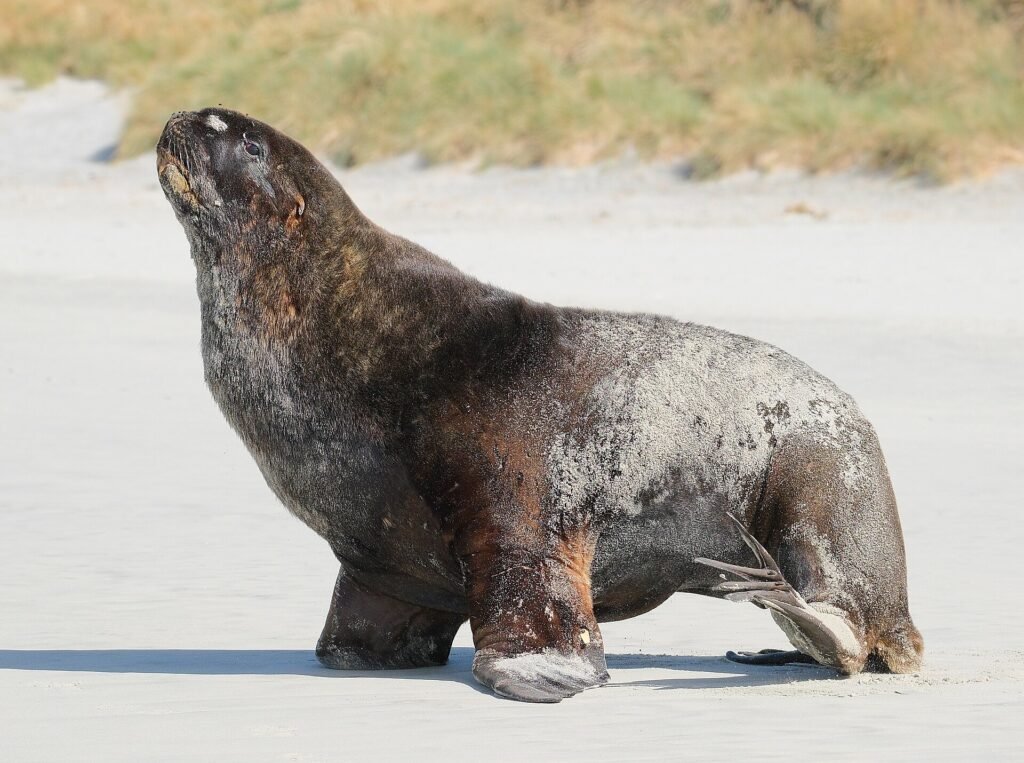
Sea lions haul out on beaches around Otago, the Catlins and Stewart Island, and fur seals are everywhere on rocky coasts. Both are protected. Sea lions in particular can be territorial in breeding season and have bitten people who got too close. DOC asks you to stay at least 20 metres away and never get between a sea lion and the water.
Stingrays and eagle rays
The short-tail stingray is one of the largest stingrays in the world and lies on sandy harbour floors in summer. Shuffle your feet when wading. A sting is excruciating but rarely dangerous; hot water immersion and medical attention are the standard response.
Jellyfish
Bluebottles (Portuguese man o’ war) wash up on northern beaches after onshore winds, and lion’s mane jellyfish appear in cooler southern waters. Stings are painful but not usually serious. Rinse with seawater, remove tentacles and apply heat.
And on land?
New Zealand has no land snakes, no scorpions and only one venomous native spider, the rare katipo, found in coastal dunes. Bites are extremely uncommon. The country’s dangers are weather, water and terrain, not wildlife.
How New Zealand Compares With Other Wildlife Destinations
Travellers weighing up destinations often ask how New Zealand stacks up against the tropics. Warm-water resorts have more sharks in the shallows, mostly curious and harmless reef species, as covered in our guide to sharks in Bora Bora. New Zealand has fewer sharks near beaches but more of the big, cool-water species. On land the country is unusually benign: like Hawaii, which we cover in snakes in Hawaii, it has no native land snakes, and nothing like the large predators described in our guide to bear encounters in Canada’s national parks.
Frequently Asked Questions
Are there great white sharks at New Zealand beaches?
Occasionally, yes. Great whites are most common around Stewart Island, the Chathams and the Otago and Kaikoura coasts, but individuals turn up at North Island surf beaches in summer. Sightings are rare, incidents rarer still, and lifeguards clear the water when one is seen.
Is it safe to swim in New Zealand?
Swimming is safe at patrolled beaches between the flags. The hazards that actually hurt people are rips, cold water and rocks, not sharks. Follow lifeguard instructions and you have very little to worry about.
When is shark season in New Zealand?
Coastal shark activity peaks from December to March, when the water is warmest and bait fish come inshore. Most beach closures and sightings fall in that window.
Are there sharks in New Zealand lakes and rivers?
No. New Zealand’s lakes and rivers are freshwater and have no sharks. Only bull sharks tolerate freshwater, and they do not live in New Zealand.
What is the emergency number in New Zealand?
Dial 111 for police, fire or ambulance anywhere in the country. At a patrolled beach, alert the lifeguards first because they are usually closest and carry first-aid gear.
Bottom Line
There are sharks in New Zealand, including some of the biggest species on Earth, and they are a sign of a healthy ocean rather than a reason to stay on the sand. Serious incidents are measured in years apart, not days. Swim between the flags, avoid dawn and dusk, keep clear of seals and river mouths, and the most memorable shark of your trip will be one you paid to see from a cage off Stewart Island.