Yes, there are snakes in Bali, including a handful of dangerously venomous species. The island is home to the Javan spitting cobra, the banded and Malayan kraits, the island pit viper, the reticulated python and the king cobra, alongside a longer list of harmless rat snakes, wolf snakes and tree snakes. Snakes in Bali are most often found in rice paddies, overgrown lots, gardens and along rivers, and they do sometimes turn up in villa grounds in Canggu, Ubud and Seminyak.
Should you be worried? Most visitors never see a snake, and serious bites to tourists are rare. The caution is that Bali’s antivenom situation is weaker than in Australia or Costa Rica, so a bad bite is a bigger problem here than in some other destinations. Sensible habits, closed shoes at night, a torch on garden paths, no bare hands in long grass, cover almost all of the risk.
This guide names the species, explains where and when encounters happen, gives an honest view of the danger, and sets out what to do if someone is bitten. It also covers the island’s other wildlife, from rabies-carrying monkeys and dogs to the jellyfish and dengue mosquitoes that cause far more trouble than snakes.
Contents
- Which snakes live in Bali?
- Where and when do snake encounters happen in Bali?
- How dangerous are Bali's snakes really?
- Practical safety tips for avoiding snakes in Bali
- What to do if you are bitten or sprayed
- Other wildlife worth knowing about in Bali
- Insurance, hospitals and emergencies
- Frequently Asked Questions
- Bottom line
Which snakes live in Bali?
Bali’s snake fauna is a subset of Java’s, with a few Lesser Sunda species mixed in. The table lists the ones you should know, in rough order of how much they matter to a visitor.
| Species | Where it is found | Risk level |
|---|---|---|
| Javan spitting cobra (Naja sputatrix) | Rice paddies, farmland, village edges and gardens across the lowlands | High; can bite or spray venom at the eyes |
| Banded krait (Bungarus fasciatus) and Malayan krait (Bungarus candidus) | Near water, paddies, damp gardens; strictly nocturnal | High; painless bites with delayed neurotoxic effects |
| Island pit viper (Trimeresurus insularis) | Trees and shrubs in lowland and foothill forest and gardens | Moderate; painful bites, rarely fatal, but no specific antivenom in Bali |
| King cobra (Ophiophagus) | Forested hills and plantations; uncommon | High if bitten, but encounters are rare |
| Reticulated python (Malayopython reticulatus) | Rivers, drains, paddies, occasionally villa gardens | Non-venomous; large adults can bite hard but are not a realistic threat |
| Rat snakes, wolf snakes, bronzebacks, golden tree snakes | Everywhere, including houses and gardens | Harmless; wolf snakes are the usual indoor visitor |
| Banded sea krait (Laticauda colubrina) | Reefs and rocky shores, especially the east coast and Nusa islands | Highly venomous but extremely docile; bites almost unheard of |
Javan spitting cobra
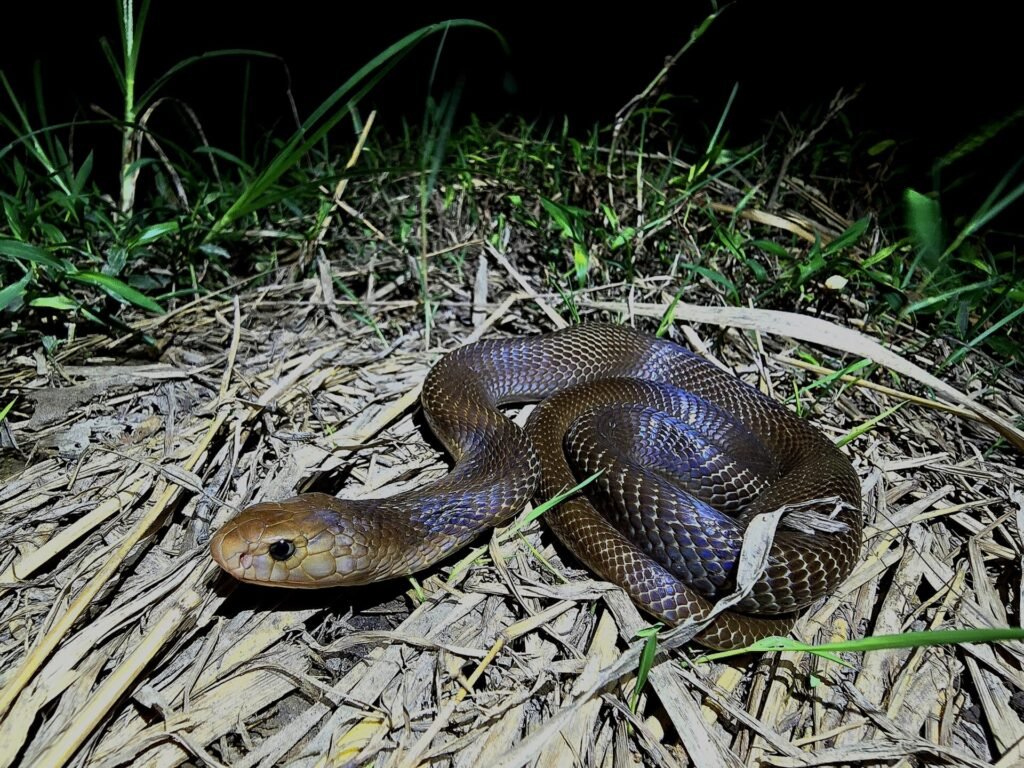
This is the species Balinese snake catchers remove most often from homes and villas. It is black or dark brown, hoods up when threatened and can spray venom toward the eyes from a metre or more away, which causes intense pain and can damage the cornea if not rinsed quickly. Bites cause tissue damage and, less often, systemic effects. It loves rice paddies and the overgrown land between villas, which explains why it turns up in Canggu and Ubud.
Kraits
Kraits are the quiet danger. The banded krait has bold black and yellow bands; the Malayan krait is black and white. Both are nocturnal and placid by day, but a bite at night, sometimes to someone sleeping on the floor or walking barefoot, can be nearly painless and lead to progressive paralysis hours later. Any krait bite needs hospital observation even if it feels like nothing.
Island pit viper
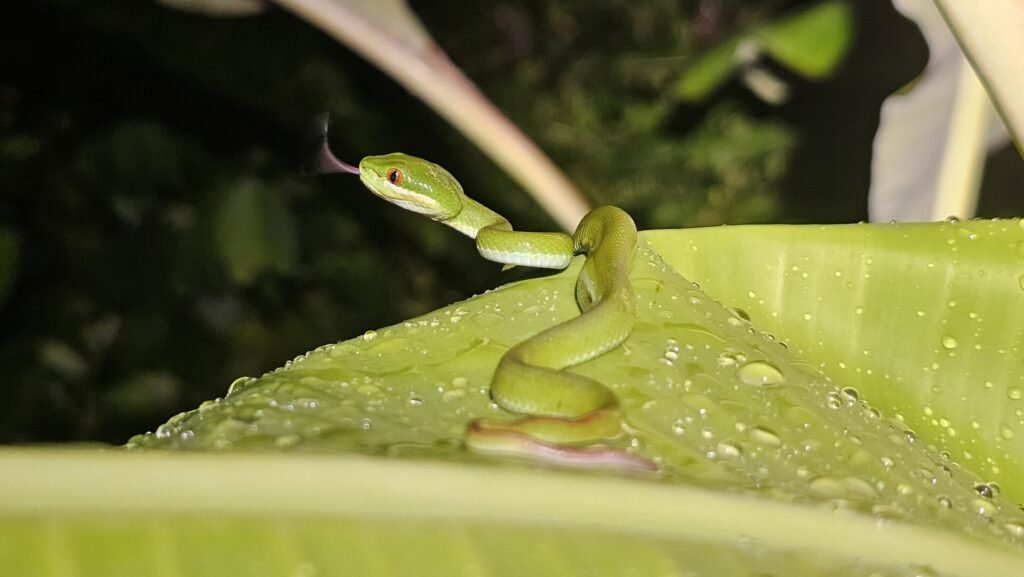
Known locally as the green tree viper, this small, bright green snake sits motionless in shrubs and low trees. Bites usually happen to hands reaching into foliage and cause severe pain and swelling. Deaths are rare, but Indonesia’s standard antivenom does not cover this species, so treatment is supportive and can mean a longer recovery.
Where and when do snake encounters happen in Bali?
Snakes follow water, prey and cover, and in Bali that means rice paddies, river gullies, drainage channels and overgrown plots. The busy southern tourist areas have fewer snakes than the countryside, but the fashionable villa zones are built directly into former paddy land and see regular visits.
Ubud and the rice-field villas
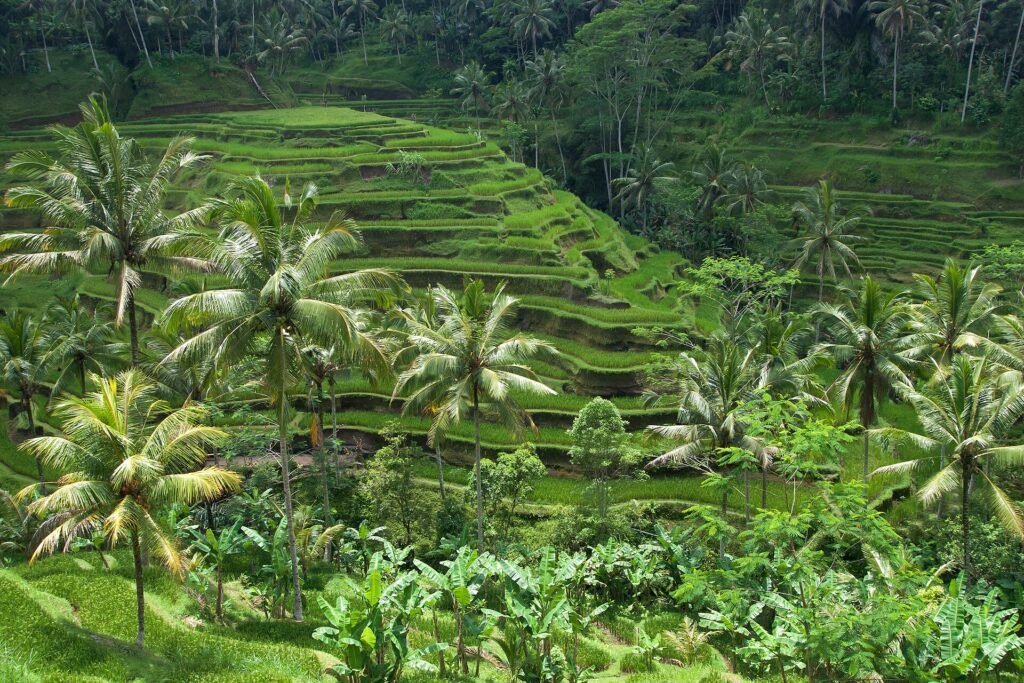
Ubud’s famous paddy views come with cobras, kraits and pythons as neighbours. Villas with ponds, thick planting and open-sided living areas are the most common sites of snake call-outs. It is a reason to keep shoes on after dark, not a reason to avoid Ubud.
Canggu, Seminyak and Uluwatu
Canggu’s rapid development on paddy land means snakes are pushed into the remaining gaps between villas, and rescuers are called there often. Seminyak and Kuta are more built up and see fewer. The Bukit around Uluwatu is dry limestone scrub where pit vipers and the occasional cobra live in the undergrowth near clifftop paths.
The mountains, the north and the east
Hikers on Mount Batur or in the forests around Munduk and Bedugul may encounter pit vipers and, rarely, a king cobra. The dry north and east around Amed and Tulamben have fewer land snakes but are the best place to see banded sea kraits on the reef, which are harmless if left alone.
Season and time of day
Snake activity rises in the wet season from roughly November to March, when flooding flushes animals out of paddies and drains and into gardens. Cobras are active by day and dusk; kraits and pythons move at night. The riskiest moment of a typical trip is a barefoot walk across a dark lawn after dinner.
How dangerous are Bali’s snakes really?
Serious bites to tourists are rare, and most visitors leave without ever seeing a snake. Where Bali differs from places like Australia is the medical response. Indonesia’s locally produced polyvalent antivenom covers the Javan spitting cobra, the banded krait and the Malayan pit viper, but not the island pit viper or the Malayan krait, and supplies at hospitals can be limited. International hospitals in Denpasar and the south, including the main public hospital at Sanglah and the private BIMC and Siloam hospitals, are the places to go.
That gap is why prevention carries more weight here than elsewhere. It also means your travel insurance should cover medical evacuation to Singapore or Australia, which is the standard route for a severe envenomation. For context, snakes in Costa Rica describes a country with more venomous species but a stronger antivenom network, while snakes in Hawaii covers an island with none at all.
Keep the risk in proportion. Bali’s motorbike accidents, rabies, dengue, rip currents and methanol-tainted drinks each cause far more harm to visitors every year than snakes do.
Practical safety tips for avoiding snakes in Bali
- Wear closed shoes and use a torch on garden paths, lawns and rice-field walks after dark.
- Keep villa doors and screens closed at night, and check that gaps under doors are sealed.
- Shake out shoes, towels and bags left on the floor, and do not sleep on the floor in open-sided rooms.
- Never reach into thick foliage, woodpiles, drains or ponds with bare hands.
- If you see a snake, back away slowly and give it a clear escape route. Do not try to kill it; most bites happen during attempts to kill or catch snakes.
- Ask villa staff or your host for the number of a local snake rescue group; volunteer catchers operate across the south and around Ubud and will relocate the animal.
What to do if you are bitten or sprayed
Assume every bite is venomous. Kraits in particular give painless bites that feel trivial for hours, so do not wait for symptoms.
- Move away from the snake and sit down. Keep the bitten limb still and below the heart.
- For a suspected cobra or krait bite, apply a firm pressure bandage over the bite and up the whole limb, as you would for a sprain, and splint it. Do not use a tight tourniquet.
- Call 112, Indonesia’s national emergency number, or go directly to Sanglah hospital in Denpasar or an international hospital such as BIMC or Siloam. Tell them it is a snakebite so they can check antivenom stock.
- Remove rings and tight clothing before swelling starts. Do not cut, suck, ice or apply herbal remedies.
- If venom is sprayed in the eyes, rinse immediately and continuously with clean water, milk or any bland liquid for at least fifteen minutes, then get to a hospital.
- Photograph the snake only if it is safe from a distance, and note the time of the bite for the doctors.
Other wildlife worth knowing about in Bali
Monkeys and dogs: the rabies risk
Bali has had rabies in its dog population for years, and the long-tailed macaques at Ubud’s Monkey Forest and Uluwatu temple bite and scratch visitors regularly. Any bite or scratch from a monkey, dog, cat or bat needs immediate wound washing and a trip to a clinic for post-exposure vaccination. Talk to a travel clinic about pre-travel rabies vaccination if you will be in rural areas.
Mosquitoes
Dengue is common across Bali, especially in the wet season. Use repellent day and night, since the carrier mosquito bites by day, and check the CDC or WHO pages for current advice before you travel.
Jellyfish, sea urchins and rip currents
Bluebottles and other jellyfish wash onto the surf beaches at Kuta and Seminyak at times, and urchins carpet the rocky shallows at Amed and the Nusa islands. The far bigger ocean danger is rip currents on the south-coast beaches; swim only between the flags where lifeguards are on duty.
Insurance, hospitals and emergencies
Bali’s private international hospitals are good and expect payment upfront, so travel insurance with medical cover and evacuation is essential rather than optional. Keep 112 and your insurer’s assistance line saved in your phone, and carry a small kit with an elasticated bandage, antiseptic and sting relief. If you are staying for months as a remote worker, the same advice applies to the rest of the region; our guide to overlooked dangers in Singapore covers the city most Bali evacuations fly to, and our ultimate guide to staying safe abroad has the general checklist.
Frequently Asked Questions
Are there cobras in Bali?
Yes. The Javan spitting cobra is common in paddies and gardens across the lowlands and is the species most often removed from villas. King cobras also live in Bali but are uncommon and mostly found in forested hills and plantations away from the tourist areas.
Will I find snakes in my Bali villa?
It is possible, especially in Ubud and Canggu where villas sit in former rice fields with ponds and dense planting. Most visitors never see one. Keep doors closed at night, use a torch outdoors and ask your host for a local snake rescue contact so any visitor can be relocated safely.
Is there antivenom in Bali?
Partially. Indonesia’s polyvalent antivenom covers the Javan spitting cobra and banded krait but not the island pit viper or Malayan krait, and stocks vary. Go to Sanglah hospital or an international hospital immediately after any bite, and make sure your insurance covers evacuation to Singapore or Australia.
Are sea snakes in Bali dangerous?
Banded sea kraits have potent venom but are famously docile and have small mouths. They are seen regularly by divers at Tulamben, Amed and Nusa Penida and almost never bite unless handled. Enjoy the sighting and keep your hands away.
Bottom line
Snakes in Bali are real and a few of them are seriously venomous, but the chance of a tourist being bitten is small and the chance of a bad outcome is smaller if you reach a hospital quickly. Keep your shoes on after dark, carry a torch, keep your hands out of the foliage and your doors closed, and buy insurance that covers evacuation. Then treat any snake you do see as what it is: a glimpse of the island’s wild side, best enjoyed from a few metres away.