The pros and cons of living in Columbus, Ohio, are easy to summarize: it is one of the fastest-growing metros in the Midwest, with a strong job market, a huge university, neighborhoods that have genuinely improved over the past decade and a cost of living that still undercuts most coastal cities. The flip side is that growth has pushed rents and home prices up faster than wages, the city is almost entirely car-dependent, and the weather spends a lot of the year being gray.
Columbus surprises people. It is the largest city in Ohio, bigger than Cleveland and Cincinnati, and it has avoided the population decline that hit much of the Rust Belt. Ohio State University, state government, Nationwide, JPMorgan Chase, Honda and a wave of tech and logistics investment have kept it growing. It is also flat, sprawling and short on natural scenery, which matters if you are coming from the mountains or the coast.
Here are 16 pros and cons, eight each, covering housing, jobs, schools, healthcare, commuting, culture, safety and the outdoors, plus a cost snapshot table and a step-by-step plan for moving.

Contents
Why are so many people moving to Columbus?
The short version: jobs and relative affordability. Columbus has added residents steadily for twenty years while similar-sized cities shrank, thanks to a diversified economy, a young population anchored by one of the biggest universities in the country and a central location within a day’s drive of most of the eastern US.
The pros of living in Columbus
1. A strong, diverse job market
Columbus is not a one-industry town. State government and Ohio State provide a stable base, Nationwide and Huntington are headquartered downtown, JPMorgan Chase runs one of its largest employee hubs here, and Honda has manufactured in nearby Marysville for decades. Intel’s semiconductor project in New Albany, although delayed, has drawn a cluster of suppliers. Check each employer’s official careers page for current roles.
2. Housing is still cheaper than most big metros
As of 2026, the median home price in Columbus sits roughly in the $280,000 to $340,000 range, with older bungalows and ranches on the east and west sides well below that. A one-bedroom rental in a mid-range neighborhood runs about $1,200 to $1,600. That is far below Chicago, Denver or any coastal city, although it is no longer the bargain it was a decade ago. Check Zillow or Redfin for current figures.
3. Neighborhoods with real character
The Short North arts district, the brick streets and bakeries of German Village, the bungalows and bike lanes of Clintonville, the historic homes of Victorian Village and the revived Franklinton warehouse district each feel distinct. Suburbs like Dublin, Worthington, Westerville and Bexley have walkable old town centers rather than just strip malls.
4. Big-city healthcare
Columbus has three major hospital systems, The Ohio State University Wexner Medical Center, OhioHealth and Mount Carmel, plus Nationwide Children’s Hospital, one of the largest pediatric hospitals in the country. For families and anyone with ongoing medical needs, that depth of care is a real advantage over smaller Midwest cities.
5. Excellent suburban school districts
Several of Ohio’s highest-rated public districts ring the city, including Dublin, Upper Arlington, Olentangy, New Albany, Bexley and Worthington. If schools are your priority, you can find top-tier public education without paying private tuition, as long as you are willing to live in the suburbs.
6. A young, friendly and diverse city
Roughly 60,000 Ohio State students keep the city young, and the metro has large Somali, Bhutanese-Nepali, Latino and Asian communities that show up in the food scene along Morse Road and in the North Market. Columbus also has one of the largest Pride festivals in the Midwest, and newcomers generally find it easy to make friends.
7. Sports and events year-round
Ohio State football is a civic religion, with Saturdays at Ohio Stadium drawing more than 100,000 fans. The Columbus Crew play at Lower.com Field, the Blue Jackets play NHL hockey at Nationwide Arena, and the Ohio State Fair and the Arnold Sports Festival fill the calendar.
8. Easy to get almost anywhere
Columbus sits within a day’s drive of about half the US population. Cincinnati and Cleveland are under two hours away, Pittsburgh and Indianapolis under three, and Chicago roughly six. John Glenn Columbus International Airport is small enough to be painless and has nonstop flights to most major hubs.
The cons of living in Columbus
Columbus is a comfortable city rather than an exciting one, and the following drawbacks come up again and again with people who move here from elsewhere.

9. You will need a car
COTA runs a reasonable bus network, and the city is building bus rapid transit corridors under its LinkUS plan, but there is no rail transit and most neighborhoods are designed around driving. Living car-free is possible only in a handful of areas such as the Short North, downtown, German Village and the campus area.
10. The weather is gray for months
Columbus winters are not as brutal as Buffalo or Madison, but they are long, damp and overcast, with frequent freezing rain and cloud cover that can last for weeks. Summers are hot and humid, and spring brings severe thunderstorms with occasional tornado warnings.
11. Flat land and limited natural scenery
Central Ohio is farmland and suburbs. There are no mountains, no coast and no large lakes nearby. The Columbus and Franklin County Metro Parks system is excellent, and Hocking Hills with its gorges and waterfalls is about an hour southeast, but if you want big landscapes on your doorstep, Columbus will disappoint.
12. Rents and home prices are rising fast
Because the metro has added people faster than it has built housing, prices have climbed steadily. Bidding wars on homes under $350,000 are common, and rents in desirable neighborhoods have increased sharply since 2020.
13. City income tax
Columbus charges a municipal income tax of 2.5 percent on wages earned in or by residents of the city, on top of Ohio state income tax. Most surrounding suburbs levy their own municipal tax too, with partial credits for tax paid elsewhere. Confirm current rates with the City of Columbus Income Tax Division and factor them into any salary comparison.
14. Columbus City Schools lag the suburbs
The quality gap between Columbus City Schools and the suburban districts is wide. The city district has some strong programs and lottery-based specialty schools, but overall performance and facilities trail Dublin or Upper Arlington. Families with school-age children often end up in the suburbs, which also means a longer commute.
15. Safety differs by neighborhood
Columbus has lower reported crime than Cleveland or Cincinnati overall, but neighborhoods such as parts of the Hilltop, Linden and the South Side have had persistently higher reported violent crime, and car thefts have been a citywide problem in recent years. Use the Columbus Division of Police crime map and visit areas in person before committing.
16. Traffic on the outerbelt and the I-70/71 split
For a city its size, Columbus has surprisingly bad rush-hour congestion. I-270 and the downtown I-70/I-71 interchange are chronic bottlenecks, and a long-running reconstruction project has added lane closures. A suburban commute that looks like twenty minutes on a map can easily take forty-five.
Cost of living in Columbus: a snapshot
All ranges are as of 2026 and intended as a guide. Check Numbeo, Zillow, Apartments.com and the City of Columbus website for current figures before budgeting.
| Expense | Typical range (USD, monthly unless stated) | Notes |
|---|---|---|
| One-bedroom rent, Short North or downtown | $1,400–1,900 | New-build apartments at the top end |
| One-bedroom rent, Clintonville, Westerville or the east side | $1,000–1,400 | Older complexes considerably cheaper |
| Median home sale price (city) | $280,000–340,000 | Dublin, Bexley and New Albany well above; Hilltop and Linden well below |
| Utilities, two-bedroom | $150–250 | Gas heating costs spike in January and February |
| COTA monthly bus pass | Around $60–65 | Check COTA’s fare page for current pricing |
| Groceries, one person | $350–450 | Kroger, Giant Eagle and Aldi dominate |
| Municipal income tax | 2.5% of wages | Plus Ohio state income tax |
Where should you live in Columbus?
Columbus is really a collection of small communities stitched together by freeways, so picking the right one matters.
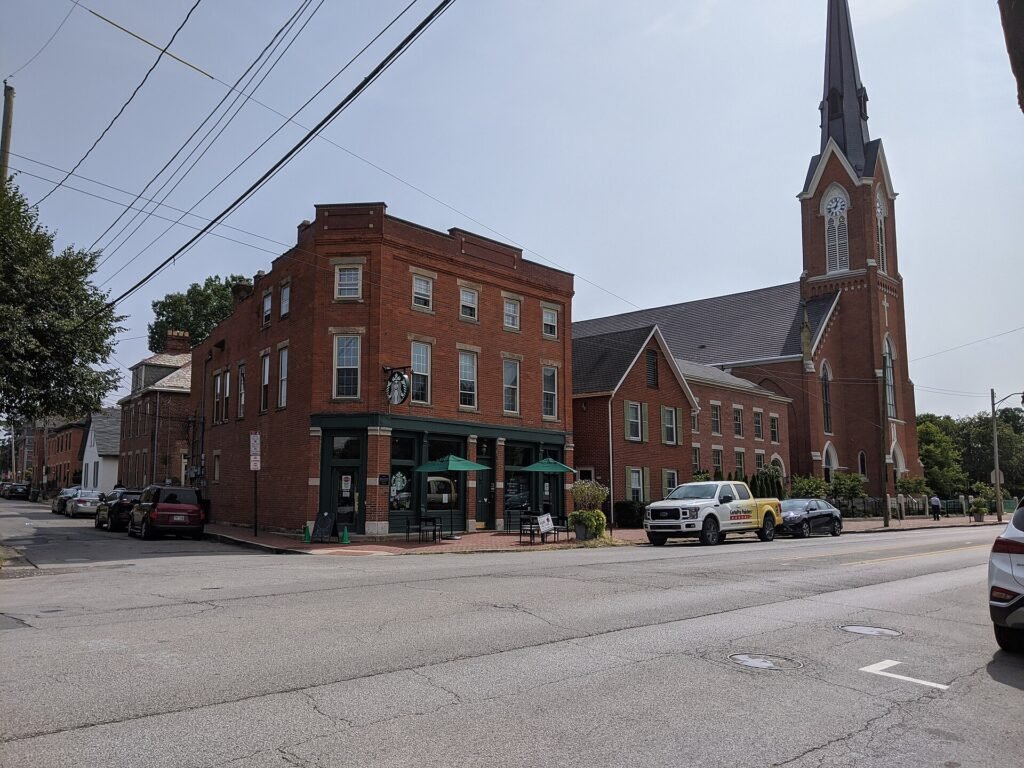
- Walkable and lively: Short North, Italian Village, Victorian Village, Downtown, German Village.
- Family-friendly city neighborhoods: Clintonville, Beechwold, Bexley, Grandview Heights.
- Top suburban schools: Dublin, Upper Arlington, Powell and Lewis Center (Olentangy), New Albany, Worthington.
- Budget-friendly: Hilliard, Reynoldsburg, Gahanna, the Far East Side, Whitehall.
- Creative and up-and-coming: Franklinton, Olde Towne East, Merion Village.
Thinking about other mid-sized cities? Compare Columbus with the pros and cons of living in Madison, another university-driven state capital, the pros and cons of living in Knoxville if you want cheaper housing with mountains nearby, or the pros and cons of living in Philadelphia for a bigger, more walkable city. If Chicago is on the list, start with our guide to the safest neighborhoods in Chicago.
How to move to Columbus: a step-by-step plan
- Line up a job before you sign a lease. Target the big employers’ official careers pages and Ohio State’s HR portal, and ask about hybrid arrangements, since that determines how close to downtown you need to be.
- Decide city or suburb based on schools and tax. Run the municipal income tax comparison and look up district report cards on the Ohio Department of Education website.
- Visit on a weekday and a Saturday. Drive your likely commute at rush hour, then spend a Saturday in the Short North, Clintonville and one suburb.
- Get pre-approved and move quickly on housing. Well-priced homes go under contract within days, so a local agent who knows the micro-markets is worth having.
- Budget for a car and insurance. Even downtown, most jobs and errands assume driving. Ohio car insurance rates are moderate by national standards.
- Register and settle the paperwork. Transfer your license at the Ohio BMV, register to vote, and set up city income tax withholding with your employer.
Frequently Asked Questions
Is Columbus, Ohio a good place to live?
For most people, yes. It offers a strong job market, decent housing costs, excellent suburban schools and a friendly, young population. The main compromises are the gray winters, car dependency and the lack of dramatic scenery.
How much money do you need to live comfortably in Columbus?
A single renter can live comfortably on around $55,000 to $70,000 a year as of 2026, while a family hoping to buy in a good school district will want a combined income of $100,000 or more.
Is Columbus safe?
Overall reported crime is lower than in Ohio’s other large cities, and most neighborhoods feel comfortable day to day. A few areas have higher reported violent crime, and car theft has been a citywide concern. Check the Columbus Division of Police crime map before choosing a neighborhood.
What is the weather like in Columbus?
Four full seasons, with humid summers in the upper 80s°F, long gray winters that hover around freezing with periodic snow, and a stormy spring. Sunshine is in short supply from November to March.
Can you live in Columbus without a car?
Only in a few central neighborhoods such as the Short North, downtown, German Village and the campus area, where COTA buses and bike lanes make it workable. Elsewhere, a car is essentially required.
The bottom line on living in Columbus
Columbus is a practical choice: a growing economy, big-city healthcare, strong suburban schools and housing that is still reasonable by national standards. It will not win you over with scenery or sunshine, and you will spend time in traffic. If you want a stable, affordable base with plenty of opportunity and do not mind a flat, cloudy landscape, Columbus delivers.