The pros and cons of living in Tacoma, Washington, used to be a short list: cheap, close to Seattle, and smelly. The paper-mill odor is mostly history, the housing is no longer cheap, and the city has grown into something more interesting than a Seattle overflow valve. Today Tacoma offers waterfront parks, a revived downtown museum district, genuine neighborhoods and a view of Mount Rainier that stops newcomers in their tracks, all at prices that still undercut Seattle by a wide margin.
The trade-offs are real. The commute north on I-5 is one of the worst in the country at peak hours, the gray drizzle lasts from October to May, reported property crime and car theft have been persistent concerns, and Pierce County prices have climbed fast.
Below are 16 pros and cons, eight on each side, covering cost of living, housing, jobs, weather, commuting, schools, healthcare, culture, safety and the outdoors, followed by a cost snapshot table and a step-by-step plan for moving.
Contents
Is Tacoma a good place to live?
For a lot of people, yes, and for a growing number it is a deliberate first choice rather than a compromise. Tacoma is the third-largest city in Washington, sits on Commencement Bay about 32 miles south of Seattle, and is the economic hub of Pierce County. Whether it suits you depends mostly on where you will work and how you feel about rain.
The pros of living in Tacoma
1. Much cheaper than Seattle for the same region
As of 2026, the median home price in Tacoma sits roughly in the $450,000 to $520,000 range, compared with well over $800,000 in Seattle. A one-bedroom apartment in a decent neighborhood typically rents for $1,400 to $1,900, several hundred dollars below equivalent Seattle units. Check Zillow or Redfin for current numbers.
2. No state income tax
Washington has no personal income tax on wages, a meaningful saving compared with Oregon, California or most eastern states. The state makes up for it with a sales tax of roughly 10 percent in Tacoma and property taxes that have risen with home values, but for higher earners the overall burden is still favorable. Check the Washington Department of Revenue for current rates.
3. Mount Rainier, Puget Sound and the Olympics within reach
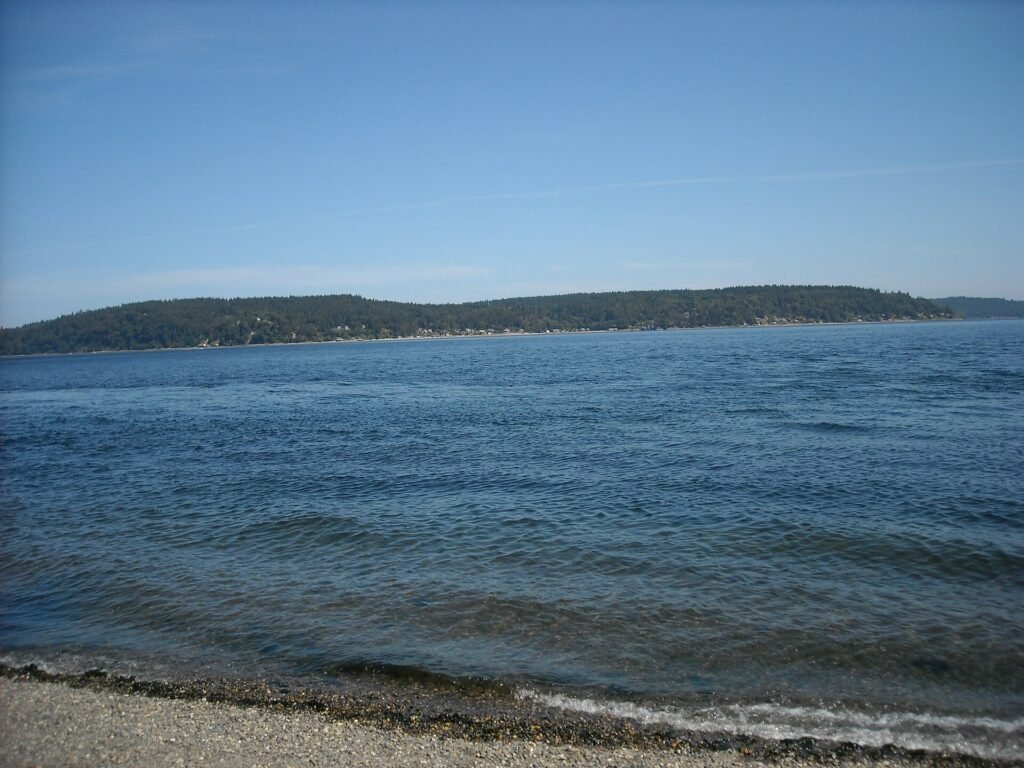
Mount Rainier National Park is roughly an hour and a half to two hours away, the Olympic Peninsula is a bridge or ferry ride west, and Puget Sound is right there for kayaking, crabbing and sailing. Within the city, Point Defiance Park is one of the largest urban parks in the US, with old-growth forest, Owen Beach, the Five Mile Drive loop and the Point Defiance Zoo and Aquarium.
4. A real downtown with museums and a waterfront
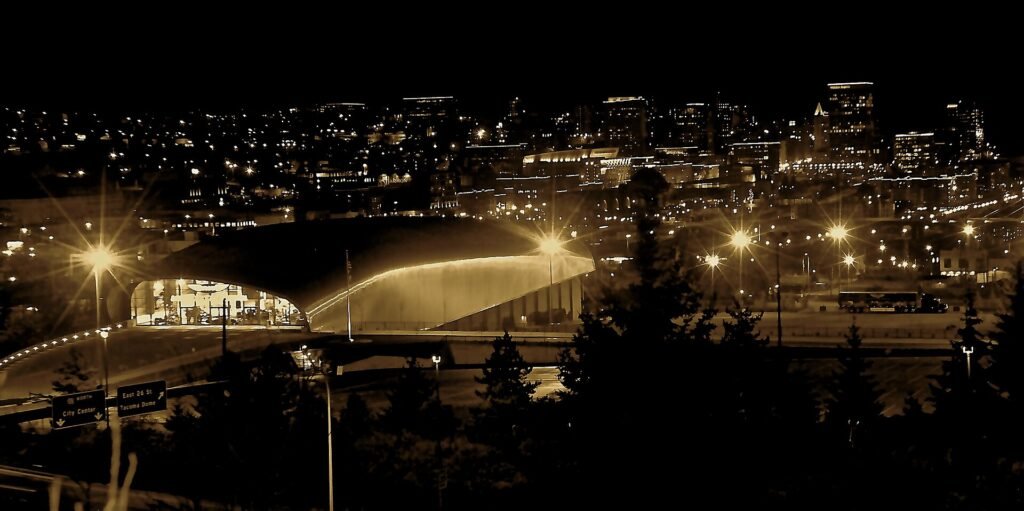
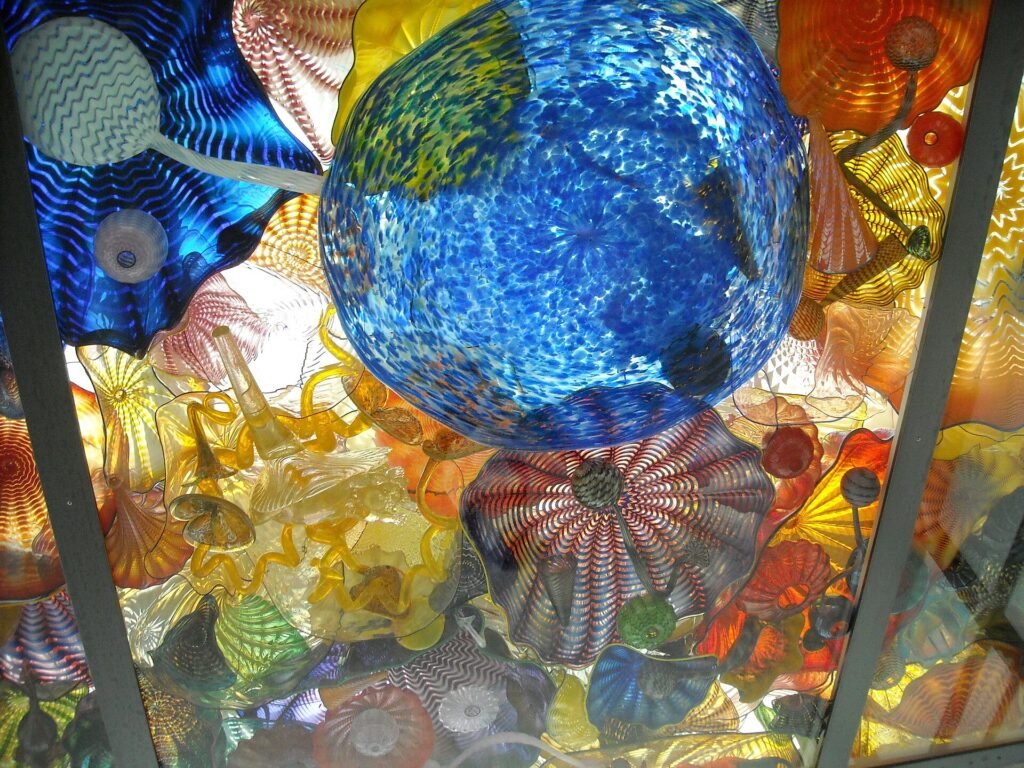
The Museum of Glass, the Chihuly Bridge of Glass, Tacoma Art Museum, the Washington State History Museum and LeMay–America’s Car Museum sit within a few blocks of each other. The Ruston Way waterfront and the Dune Peninsula at Point Ruston offer miles of walking and cycling along the bay.
5. Stable employment from healthcare, the port and the military
MultiCare and Virginia Mason Franciscan Health are among the largest employers in the county, the Port of Tacoma is one of the busiest container ports on the West Coast, and Joint Base Lewis-McChord supports tens of thousands of military and civilian jobs. The University of Washington Tacoma, Pacific Lutheran University and the University of Puget Sound add education jobs. Check official careers pages for current roles.
6. Neighborhoods with character and walkable main streets
The Proctor District has a Saturday farmers’ market and a small-town feel, the Stadium District has Victorian homes and the famous Stadium High School, Old Town is the historic core on the bay, and the North End is leafy and quiet. The Sixth Avenue strip and the Lincoln District offer cheaper, more diverse dining.
7. Light rail, commuter rail and an airport nearby
Sound Transit’s Sounder train runs from Tacoma Dome Station to downtown Seattle in about an hour during commute times, the T Line streetcar connects the Dome, downtown and Hilltop, and Seattle-Tacoma International Airport is 25 to 30 minutes north.
8. Mild temperatures year-round
Tacoma rarely gets very hot or very cold. Summer highs sit in the 70s and low 80s°F with almost no humidity, and winter lows hover around freezing with only occasional snow. The summers are some of the most pleasant in the country.
The cons of living in Tacoma
Most of Tacoma’s downsides come from being tied to Seattle’s economy and sitting in the wettest corner of the lower 48 states.
9. The I-5 commute to Seattle is grueling
If your job is in Seattle, Bellevue or Redmond, expect 60 to 90 minutes each way by car at peak times, and worse when there is a crash near the Tacoma Dome or Joint Base Lewis-McChord. The Sounder train helps but only runs during weekday commute hours. A hybrid or South Sound job changes the calculation entirely.
10. Gray, wet weather for most of the year
Tacoma does not get dramatic rainfall totals, but it gets persistent drizzle and cloud cover from October through May. The lack of sunlight affects some people seriously. The payoff is a glorious July to September.
11. Property crime and car theft are persistent concerns
Tacoma has reported higher property crime and car theft than many comparable cities in recent years, and some neighborhoods, including parts of South Tacoma, the Eastside and Hilltop, have had higher reported violent crime. Conditions vary block by block and have improved in several areas. Check the Tacoma Police Department’s public crime map and visit in person before you commit.
12. Housing costs have risen sharply
Tacoma is cheaper than Seattle, but it is no longer cheap. Home prices roughly doubled in the decade to 2022 as Seattle workers moved south, and rents followed. For local wages in healthcare support, retail or the port, the math has become difficult.
13. High sales tax and rising property taxes
The flip side of no income tax is a combined state and local sales tax around 10 percent on most purchases, plus car-tab fees and property taxes that increase with assessments.
14. Tacoma Public Schools are mixed
The district includes strong options such as Stadium High School and the Science and Math Institute, but overall results lag the suburban districts in University Place, Gig Harbor (Peninsula School District) and Puyallup. Families often choose those suburbs, which pushes up prices there. Compare schools on the Washington OSPI report card website.
15. Earthquake and volcano risk
Tacoma sits on the Cascadia Subduction Zone and near the Tacoma Fault, so earthquake preparedness is a fact of life. Mount Rainier is an active volcano, and the Puyallup River valley communities to the southeast lie in mapped lahar hazard zones. Pierce County Emergency Management publishes guidance worth reading.
16. Limited nightlife and big-city amenities
Tacoma has a decent food and craft beer scene, but for major concerts, professional sports and a broad job market you will still drive to Seattle. The city can feel quiet after 10pm outside a few blocks downtown and on Sixth Avenue.
Cost of living in Tacoma: a snapshot
These are hedged ranges as of 2026. Check Numbeo, Zillow, Apartments.com and the Pierce County assessor-treasurer for current figures before you budget.
| Expense | Typical range (USD, monthly unless stated) | Notes |
|---|---|---|
| One-bedroom rent, Stadium District, Proctor or downtown | $1,500–2,000 | Newer waterfront buildings at Point Ruston cost more |
| One-bedroom rent, South Tacoma, Eastside or Lakewood | $1,200–1,600 | Older complexes cheaper; check the block carefully |
| Median home sale price (city) | $450,000–520,000 | North End and University Place above; South Tacoma below |
| Utilities, two-bedroom | $150–250 | Tacoma Public Utilities power is relatively cheap; gas heat adds cost in winter |
| Sounder train, Tacoma to Seattle | Roughly $5–6 per one-way trip | Check Sound Transit’s fare page; ORCA passes available |
| Groceries, one person | $400–500 | Washington grocery prices run above the national average |
| Combined sales tax | Around 10% | No state income tax on wages |
Which Tacoma neighborhoods suit which people?
Tacoma rewards careful neighborhood choice, because price, safety and the commute can all change within a mile.
- Walkable and historic: Stadium District, Old Town, the North End near Proctor.
- Young professionals and renters: Downtown, Hilltop near the T Line, the Sixth Avenue corridor.
- Families and schools: University Place, Gig Harbor, Fircrest, North Tacoma.
- Best value: South Tacoma, the Lincoln District, Parkland, Lakewood.
- Waterfront living: Point Ruston, Ruston, Browns Point and Dash Point on the north shore.
For cheaper cities with mountains nearby, compare the pros and cons of living in Knoxville; for a cold-weather alternative with lakes instead of the Sound, see the pros and cons of living in Madison; and for an East Coast equivalent of the big-city-satellite story, read the pros and cons of living in Philadelphia. If California is also in play, our guide to the safest neighborhoods in Los Angeles gives a useful price comparison.
How to move to Tacoma: a step-by-step plan
- Confirm where you will actually work. A South Sound or hybrid job makes Tacoma an easy choice; a five-day Seattle office commute should send you to the Sounder timetable first.
- Visit in November, not July. If you can enjoy the city in the drizzle, you will love it in summer. The reverse is not reliably true.
- Walk the neighborhoods and check the crime map. Use the Tacoma Police Department’s public data, then spend an evening in each candidate area.
- Research schools early if you have children. Compare Tacoma Public Schools with University Place, Peninsula and Puyallup on the OSPI report card site.
- Get pre-approved and ask about earthquake insurance. Standard homeowners policies in Washington do not cover earthquake damage; it is a separate policy worth a quote.
- Set up the practical pieces. Transfer your license at the Washington Department of Licensing, get an ORCA transit card, and register with Tacoma Public Utilities for power and water.
Frequently Asked Questions
Is Tacoma cheaper than Seattle?
Yes, substantially. Home prices and rents in Tacoma generally sit 30 to 40 percent below Seattle as of 2026, and everyday costs are somewhat lower too.
Does Tacoma still smell?
The “Tacoma Aroma” came mainly from pulp and paper milling on the tide flats, and the main sources have closed or been cleaned up. You may still catch an industrial whiff near the port on some days, but it no longer defines the city.
Is Tacoma safe to live in?
It depends heavily on the neighborhood. The North End, Proctor, Stadium District and University Place are areas where residents generally feel comfortable, while parts of South Tacoma, the Eastside and Hilltop have had higher reported crime. Property crime and car theft are the most common concerns citywide.
How is the weather in Tacoma?
Mild and wet. Expect gray, drizzly conditions from October through May with temperatures in the 40s and 50s°F, then dry, sunny summers in the 70s and low 80s. Snow is occasional and usually brief.
Can you live in Tacoma without a car?
It is possible in downtown, Hilltop and the Stadium District, where the T Line streetcar, Pierce Transit buses and the Sounder train cover most needs. Elsewhere in the city and in the suburbs, a car is close to essential.
The bottom line on living in Tacoma
Tacoma gives you Puget Sound, Mount Rainier, a real downtown and a tax structure that favors earners, at a price well below Seattle. In return you accept months of gray weather, a brutal commute if your job is north, and the need to choose your neighborhood carefully. For South Sound workers, remote employees and anyone priced out of Seattle who still wants the Pacific Northwest, Tacoma is one of the region’s best bets.