Weighing up the pros and cons of living in Philadelphia comes down to one trade-off: you get a big, walkable, historic East Coast city for a fraction of what New York or Washington DC costs, but you accept rougher edges, a city wage tax and winters that drag. If you want culture, rowhouse charm and a train to Manhattan in about 90 minutes without a Manhattan budget, Philly is one of the best-value major cities in the country.
It is also a city of strong opinions. Fans point to Rittenhouse Square, the Italian Market, Fairmount Park and the fact that you can still buy a house on a normal salary. People who leave cite litter, SEPTA delays, car break-ins and public schools that vary wildly by zip code. Both camps are describing the same place honestly.
Below are 16 pros and cons, eight on each side, covering everything from housing and jobs to weather, schools and safety, followed by a cost snapshot table and a step-by-step moving plan.
Contents
- Is Philadelphia a good place to live? The short answer
- The pros of living in Philadelphia
- The cons of living in Philadelphia
- Cost of living in Philadelphia: a snapshot
- Which Philadelphia neighborhoods suit which people?
- How to move to Philadelphia: a step-by-step plan
- Frequently Asked Questions
- The bottom line on living in Philadelphia
Is Philadelphia a good place to live? The short answer
Yes, for most people who value urban living over suburban space. Philadelphia is the sixth-largest city in the US, sits on the Northeast Corridor between New York and DC, and costs far less than either. The honest caveats are that safety varies sharply by neighborhood, the public school system is uneven, and the combined tax burden catches newcomers off guard.
The pros of living in Philadelphia
1. Housing you can actually afford on a normal salary
Philadelphia is the only big Northeast Corridor city where buying a home is still realistic on average wages. As of 2026, citywide median sale prices sit roughly in the $250,000 to $330,000 range, and rowhomes in Point Breeze, Brewerytown or Port Richmond often list for less than a Brooklyn studio. Check Zillow or Redfin for current figures, because prices in trendy blocks move fast.
2. The lowest overall cost of living among major East Coast cities
Groceries, dining, utilities and entertainment all run noticeably cheaper than in New York, Boston or DC, and cost-of-living indexes such as Numbeo consistently place Philadelphia well below those three. Many of the best restaurants are BYOB, which cuts your bill further.
3. A genuinely walkable, transit-served city
Center City is one of the most walkable downtowns in America, laid out on William Penn’s original grid. SEPTA runs two subway lines, trolleys, buses and a Regional Rail network that reaches the suburbs and the airport. Many residents of Center City, University City and the river wards live without a car, which is a major saving compared with car-dependent cities.
4. Strong jobs in healthcare, education and life sciences
The “eds and meds” economy anchors the city. Penn Medicine, Jefferson Health, Temple Health and Children’s Hospital of Philadelphia are among the largest employers, alongside the University of Pennsylvania, Drexel and Temple. Comcast is headquartered downtown, and the Navy Yard hosts a growing life-sciences cluster. Check employers’ official careers pages for current openings.
5. Easy access to New York, DC and the shore
Amtrak reaches New York’s Penn Station in roughly 75 to 90 minutes and Washington DC in under two hours. The Jersey Shore is about an hour by car and the Pocono Mountains around two for skiing and hiking. Few cities let you live affordably while keeping two of the country’s biggest job markets within day-trip range.
6. History, art and culture at every turn
Independence Hall and the Liberty Bell are the obvious draws, but residents get the Philadelphia Museum of Art, the Barnes Foundation, Reading Terminal Market, the Mummers Parade, the Philadelphia Orchestra at the Kimmel Center and a mural program that has covered thousands of walls across the city.
7. More green space than you expect
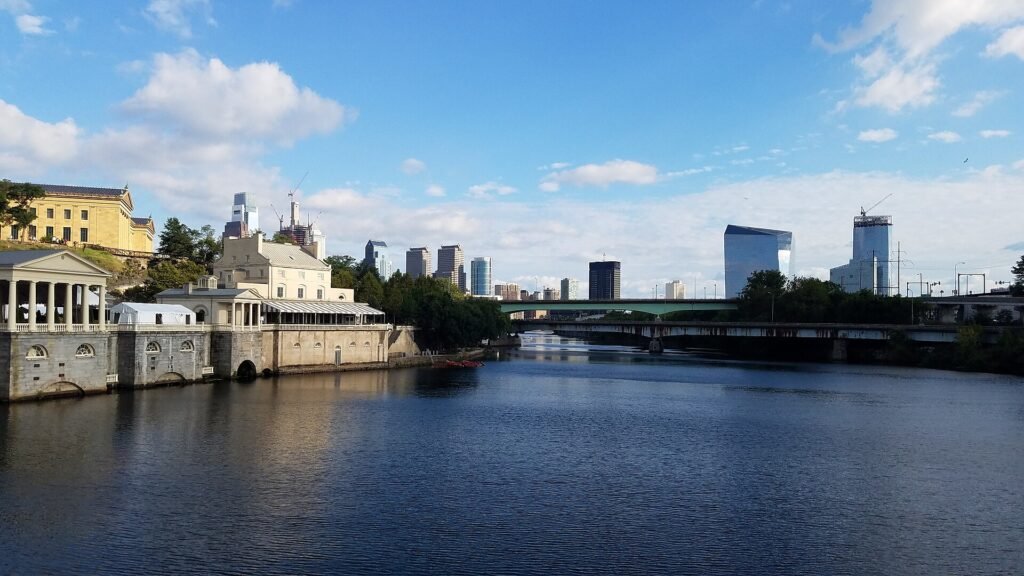
Fairmount Park is one of the largest urban park systems in the country, and its Wissahickon Valley section feels like a mountain forest minutes from Manayunk. The Schuylkill River Trail is a commuter cycling route, and the Delaware waterfront parks at Spruce Street Harbor and Cherry Street Pier fill up all summer.
8. Real neighborhoods with real identity
Philadelphia is a city of distinct neighborhoods, each with its own main street. South Philly’s Italian Market, the Victorian blocks of Spruce Hill in West Philly, the indie bars of Fishtown, the leafy streets of Chestnut Hill and Mount Airy, and the townhouses of Society Hill all feel like different towns.
The cons of living in Philadelphia
The downsides are not deal-breakers for everyone, but they are real and they are the reasons some newcomers move on after a couple of years.
9. The city wage tax
Philadelphia levies a wage tax on everyone who lives or works in the city, on top of Pennsylvania state and federal tax. As of 2026 the resident rate is around 3.7 to 3.8 percent, among the highest local income taxes in the country. Check the City of Philadelphia Department of Revenue for the current rate, and factor it into any salary comparison with the suburbs.
10. Safety varies sharply by neighborhood
Parts of North and West Philadelphia have reported high levels of violent crime, and vehicle break-ins are a common complaint citywide. Reported numbers have fallen from their 2021 to 2022 peak, but conditions differ block by block, so check the Philadelphia Police Department’s public crime map before signing a lease. Our guide to the most dangerous cities in the world explains how to read crime data without overreacting to headlines.
11. Public schools are inconsistent
The School District of Philadelphia has excellent magnet schools such as Central High School and Masterman, but admission is competitive and many neighborhood schools are under-resourced. Families often choose charter lotteries, private schools or suburban districts in Montgomery, Delaware or Bucks counties.
12. Winters are gray and summers are sticky
Philadelphia gets all four seasons at full strength: freezing rain, occasional nor’easters and long gray stretches in January and February, then hot, humid July and August days with heat-index values above 100°F. Spring and fall are beautiful but short, and heating bills in uninsulated rowhomes can be steep.
13. Litter and street cleanliness
The nickname “Filthadelphia” exists for a reason. Street cleaning was cut for years and only partially restored, and many blocks have persistent litter problems. It has improved in Center City and in neighborhoods with active civic associations.
14. SEPTA reliability and funding problems
Transit coverage is good on paper, but SEPTA has faced repeated budget shortfalls, service cuts and reliability issues, and the Market-Frankford Line has struggled with cleanliness and safety concerns. If your commute depends on Regional Rail, build in a buffer.
15. Old housing stock means old problems
Much of the city’s housing is more than a century old. That brings charm, but also knob-and-tube wiring, lead paint, damp basements and flat roofs that need regular attention. Budget for inspections and repairs, and note that property assessments have risen sharply across the city in recent years.
16. Driving and parking are a daily battle
If you keep a car, expect narrow one-way streets, aggressive drivers on the Schuylkill Expressway and scarce parking in Center City and South Philly. Residential permits help, but many households pay for a garage spot.
Cost of living in Philadelphia: a snapshot
These figures are hedged ranges as of 2026. Rents move quickly in popular neighborhoods, so confirm current numbers on Zillow, Apartments.com or Numbeo before you budget.
| Expense | Typical range (USD, monthly unless stated) | Notes |
|---|---|---|
| One-bedroom rent, Center City or Fishtown | $1,700–2,400 | Newer buildings with amenities sit at the top end |
| One-bedroom rent, outer neighborhoods | $1,100–1,600 | Roxborough, Mayfair, parts of West and South Philly |
| Median home sale price (citywide) | $250,000–330,000 | Emerging areas well below; Chestnut Hill and Society Hill well above |
| Utilities, two-bedroom | $150–280 | Higher in winter for gas heat in older homes |
| SEPTA monthly pass | Around $100 | Check SEPTA’s fare page for current pricing |
| Groceries, one person | $350–500 | Lower if you shop the Italian Market and Reading Terminal |
| City wage tax (residents) | Roughly 3.7–3.8% of wages | On top of state and federal tax |
Which Philadelphia neighborhoods suit which people?
Choosing the right neighborhood matters more in Philadelphia than in most cities, because the character, price and safety picture can change in two blocks.
- Young professionals: Rittenhouse, Fishtown, Northern Liberties, Graduate Hospital.
- Families wanting green space: Chestnut Hill, Mount Airy, East Falls, Roxborough.
- Students and academics: University City, Spruce Hill, Cedar Park.
- Buyers on a tight budget: Point Breeze, Brewerytown, Port Richmond, Mayfair.
- Quiet and historic: Society Hill, Queen Village, Old City.
If you are comparing Philly with other affordable cities, see our breakdowns of the pros and cons of living in Columbus and the pros and cons of living in Madison. If New York still tempts you, our guide to the safest neighborhoods in New York City shows what the extra money buys.
How to move to Philadelphia: a step-by-step plan
- Run the tax math first. Compare a city address with a suburban one using the Philadelphia wage tax, Pennsylvania’s flat income tax and the suburbs’ local earned income taxes.
- Visit for a long weekend and walk the blocks. Spend time in two or three candidate neighborhoods at different times of day, including after dark.
- Check schools before you check houses. Use the district’s school finder to see your catchment, and research charter and magnet deadlines if you have school-age children.
- Get pre-approved early if you are buying. Competition for well-priced rowhomes is strong, and a local lender who understands the city’s tax abatement rules and older housing stock is useful.
- Budget for a thorough home inspection. Ask specifically about the roof, wiring, sewer line and any history of water in the basement.
- Sort health insurance. Confirm which hospital system your plan covers, since Penn, Jefferson and Temple all run large networks.
- Decide on the car question. In Center City or along a subway line, many people sell the car and rely on SEPTA, Indego bike share and the occasional rental.
Frequently Asked Questions
Is Philadelphia expensive to live in?
Compared with other large Northeast cities, no. Rent and home prices are far below New York, Boston and Washington DC. The main surprise is tax: the city wage tax plus state and property taxes erode some of the housing savings.
What salary do you need to live comfortably in Philadelphia?
A single renter in a mid-range neighborhood can typically live comfortably on $60,000 to $75,000 a year as of 2026, while a family buying in a desirable area will want a household income well above $100,000. Neighborhood choice and car ownership move the number a lot.
Is Philadelphia safe to live in?
Large parts of the city, including Center City, Chestnut Hill, Manayunk and much of South Philly, are places where residents feel comfortable walking day to day. Other areas have higher reported violent crime. Use the police department’s crime map and visit in person rather than relying on citywide averages.
Can you live in Philadelphia without a car?
Yes, especially in Center City, University City, Fishtown, Northern Liberties and along the Broad Street or Market-Frankford subway lines. Outer neighborhoods such as the Far Northeast are much more car-dependent.
What is the weather like in Philadelphia year-round?
Expect cold, damp winters with occasional heavy snow, hot and humid summers, and short but pleasant springs and falls.
The bottom line on living in Philadelphia
Philadelphia rewards people who want city life without a city-sized price tag and who do their homework on neighborhoods. The wage tax, uneven schools and street-level grit are the price of admission; affordable rowhomes, a walkable downtown, big-league healthcare and culture, and a train to New York are the reward.