Ask which are the most dangerous cities in the UK and the honest answer is that no British city is dangerous by global standards. The UK records very little gun crime, violent attacks on tourists are rare, and the police forces publish their figures openly. What varies, sometimes a lot, is the level of recorded theft, vehicle crime, anti-social behaviour and night-time violence, and that is what this list ranks.
The sources behind it are the ones anyone can check: recorded crime by police force area from the Office for National Statistics (ONS), the street-level maps on police.uk, Police Scotland’s separate statistics, and crowd-sourced indexes such as Numbeo. Recorded crime depends heavily on how willing people are to report it and how each force counts, so we describe the picture qualitatively rather than quoting rates that would be out of date within a quarter.
For each city you will find what the concern actually is, which areas visitors tend to avoid late at night, and why the city is still worth your time. For the habits that work in any city, our guide to staying safe when travelling abroad is a good companion to this list.
Contents
How this list was put together
We looked at which force areas consistently sit near the top of the ONS tables for recorded offences per head, which city centres generate the most reports of theft and violence on police.uk, and where official and crowd-sourced sources agree. Large cities rise simply because they have more people, more nightlife and more visitors to target. Nothing here is a judgement on residents, and in every case the trouble is concentrated in a few streets or estates that visitors have little reason to enter.
The 10 most dangerous cities in the UK
1. London
The capital records more offences than anywhere else in the UK simply because nine million people live there and tens of millions visit. For travellers the real risks are phone snatching by riders on e-bikes and mopeds around Oxford Street, Soho, Camden and Shoreditch, pickpocketing on the Tube and at tourist sites, and drink-related trouble in the West End late at night. Westminster logs the most offences of any borough, driven by visitor numbers. Knife crime is a genuine concern but is concentrated among young people in specific areas, not tourist districts. Keep your phone out of sight near the kerb and London is as safe as any major European capital.
2. Manchester
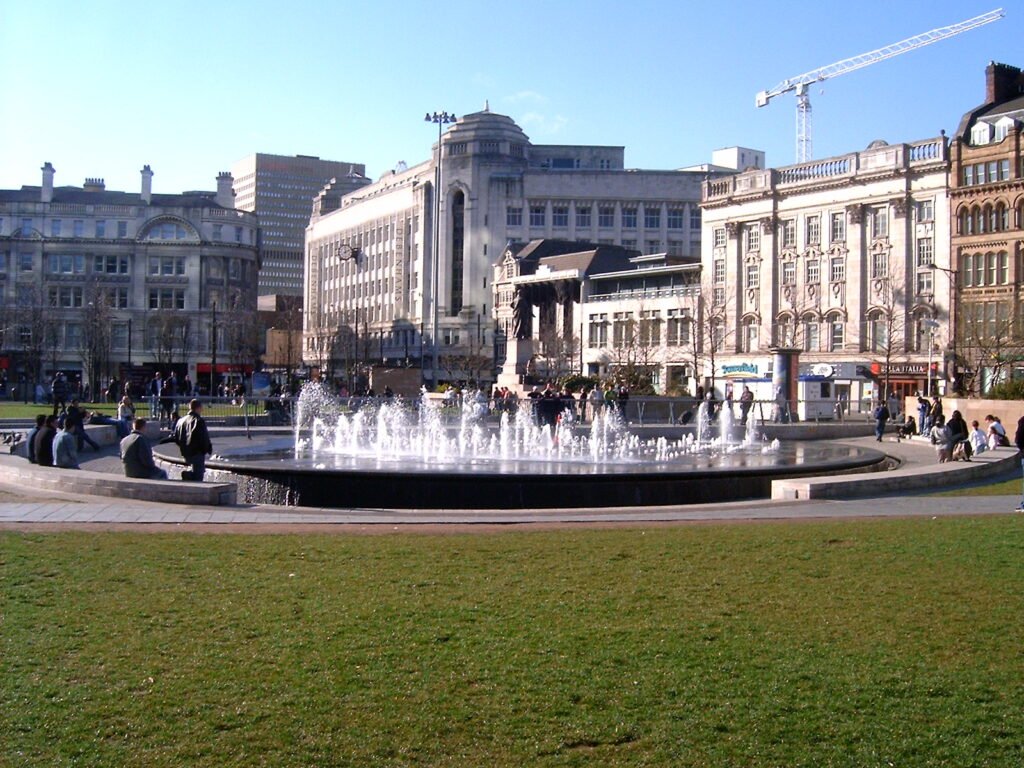
Greater Manchester Police covers one of the busiest nightlife economies in Europe, and the city centre records high levels of theft, drink-related assault and drug offences. Piccadilly Gardens has long been the area residents mention first, especially after dark, and the Northern Quarter and Deansgate Locks can get rowdy at closing time. Bicycle theft is common. Away from those streets, Manchester is friendly, walkable and full of reasons to visit, from the Science and Industry Museum to the football tours at both stadiums.
3. Birmingham
Britain’s second city has recorded crime levels broadly in line with other large cities, with vehicle crime, theft and robbery the main categories. Visitors report pickpocketing in the Bullring and around New Street station, and the Broad Street and Digbeth nightlife areas see the usual late-night incidents. Some inner-city neighbourhoods have higher reported violence but are nowhere near the main sights. The Jewellery Quarter, the canals around Brindleyplace and the Library of Birmingham are all comfortable to explore on foot.
4. Liverpool
Merseyside Police regularly reports some of the higher levels of recorded crime among English forces, with theft, vehicle crime and drug offences the main concerns. For visitors the picture is far gentler: the main issues are pickpocketing in the busy Concert Square and Ropewalks bar districts and occasional trouble around the stadiums on match days. The Albert Dock, the Beatles sites and the Georgian Quarter are relaxed, and Scousers have a well-earned reputation for being among the friendliest people in the country.
5. Leeds
West Yorkshire Police covers Leeds and Bradford, and the force area tends to sit high in the ONS tables. In Leeds the city-centre nightlife around Call Lane and Briggate generates most of the reported assaults and thefts, and the student area of Hyde Park sees a lot of burglary. Residents point to Harehills and Chapeltown as areas with more reported crime. The city centre by day is prosperous and easy, and it is a good base for the Yorkshire Dales.
6. Bradford
Bradford was UK City of Culture in 2025, and the investment that came with it has changed parts of the centre, but the city still records above-average levels of vehicle crime, anti-social driving and street violence. The centre can feel empty after shops close, which is when most reported incidents happen. Manningham and parts of the inner ring have higher reported crime. The National Science and Media Museum, the restored Alhambra Theatre and the UNESCO-listed Saltaire village just outside town are the reasons to come, and all are busy and safe by day.
7. Nottingham
Nottingham acquired an unfair reputation for gun crime in the early 2000s that has long since faded, but the city still records relatively high levels of theft, robbery and violence, much of it linked to a large student population and busy nightlife around Old Market Square. The St Ann’s and Radford estates are areas with more reported incidents. The castle, the caves beneath the city and the Lace Market are pleasant to walk, and the tram makes it easy to avoid long walks at night.
8. Middlesbrough
Middlesbrough is technically a town, but it anchors the Cleveland Police area, which has often recorded the highest rate of offences per head of any force in England and Wales, so it belongs on any honest list. Reported problems are burglary, vehicle crime, drug offences and anti-social behaviour, concentrated in deprived central and east-side estates. Visitors are few, and those who come for the Transporter Bridge, the MIMA art gallery or the Teesside coast at Saltburn are unlikely to see any of it.

9. Hull
Kingston upon Hull recorded the kind of theft, burglary and drug-related offending that comes with long-term economic hardship, and it features regularly in crowd-sourced lists of places people feel unsafe. The reality for visitors is a compact, regenerated centre: the Old Town, The Deep aquarium and the marina are busy and well lit. The areas with the most reported crime, such as parts of the east and north of the city, are residential and off the visitor map.
10. Glasgow
Scotland publishes its crime figures separately, which is why Glasgow is sometimes missing from UK-wide lists. The city once had a serious violent-crime problem, but a public-health approach pioneered by its Violence Reduction Unit has cut it dramatically and is now copied elsewhere. Today the main concerns are drink-related trouble on Sauchiehall Street at weekends, phone theft in the centre and pockets of the East End with higher reported crime. The West End, the Merchant City and the Riverside Museum are safe, lively and well worth a long weekend.
Comparison table
| City | Main concern for visitors | Areas to be careful in | Still worth visiting? |
|---|---|---|---|
| London | Phone snatching, pickpockets | Oxford Street kerbside, Tube at rush hour, West End late | Yes, Europe’s biggest draw |
| Manchester | Theft, nightlife violence | Piccadilly Gardens after dark | Yes, for music, football and museums |
| Birmingham | Vehicle crime, pickpockets | Broad Street and Digbeth late | Yes, for the Jewellery Quarter and canals |
| Liverpool | Pickpockets in bar districts | Concert Square at closing time | Yes, for the waterfront and music |
| Leeds | Nightlife theft and assault | Call Lane late, Harehills | Yes, a base for the Dales |
| Bradford | Vehicle crime, empty centre at night | Centre after closing, Manningham | Yes, for Saltaire and the museum |
| Nottingham | Theft, nightlife violence | St Ann’s, Radford | Yes, for the castle and caves |
| Middlesbrough | Burglary, vehicle crime | Central and east-side estates | Mainly for the coast nearby |
| Hull | Theft, burglary | Residential east and north | Yes, for the Old Town and The Deep |
| Glasgow | Drink-related trouble | Sauchiehall Street at weekends | Yes, for the West End and museums |
Practical safety advice for UK cities
British cities share the same handful of risks, so the same habits work everywhere.
- Keep your phone away from the kerb and in a zipped pocket; snatching from e-bikes is the fastest-growing theft in London and spreading to other cities.
- Use licensed black cabs or app-booked cars late at night and never get into an unmarked car that offers a lift.
- Watch your drink in bars and clubs; spiking is reported in every city on this list.
- Avoid walking through parks and underpasses alone after dark, even in affluent areas.
- Leave nothing visible in a parked car, including charging cables.
- Check police.uk before booking accommodation to see what is reported on the surrounding streets.
Emergency numbers and official sources
Dial 999 for police, fire or ambulance in an emergency and 101 for non-urgent police matters; NHS 111 gives medical advice. Overseas visitors should also check their own government’s advice, such as the US State Department’s United Kingdom page, Canada’s travel.gc.ca or Australia’s Smartraveller, which all rate the UK at their lowest risk level.
How to report a crime and claim on insurance
- Call 999 if it is happening now, or 101 or the force’s website afterwards; most forces let you report theft online.
- Ask for the crime reference number, which your travel insurer will require.
- Cancel cards through your bank’s app and use the “Find My” or equivalent feature to lock a stolen phone.
- Visit your embassy or high commission in London for an emergency travel document if your passport is lost.
Travel insurance is still worth having in the UK, because emergency NHS treatment is free at the point of use but follow-up care, repatriation and lost belongings are not covered for visitors from most countries.
Frequently Asked Questions
Which is the most dangerous city in the UK?
By sheer volume of recorded crime it is London, because it is by far the largest. By offences per head, the Cleveland force area around Middlesbrough has often topped the ONS tables for England and Wales. Neither figure means visitors face serious danger; both reflect concentrated problems in specific neighbourhoods.
Is the UK safe for American tourists?
Yes. The US State Department rates the United Kingdom at Level 1, its lowest advisory level, and most American visitors never experience anything worse than a pickpocket. The main adjustment is traffic driving on the left, which catches out more tourists than crime does.
Is London more dangerous than other UK cities?
Not per head. London’s size and visitor numbers inflate its totals, and some provincial force areas record more offences per resident. What London does have is more phone theft, so the single most useful habit is keeping your phone in a pocket near busy roads.
Which UK cities are the safest?
Smaller cathedral and university cities such as Bath, York, Exeter and Edinburgh consistently record lower crime and feel very comfortable for visitors. For a comparison with a popular destination outside Europe, see how the most dangerous cities in Morocco stack up.
Are UK city centres safe at night?
Generally yes, as long as you stay on busy, lit streets and travel home by licensed taxi or app car. Most reported night-time violence involves people who have been drinking together, not strangers targeting visitors. Weekend closing time, roughly 1am to 3am, is when incidents cluster.
Bottom line
Every city on this list is visited safely by millions of people a year. The problems that put them here are real but concentrated, and a few simple habits around phones, drinks and late-night transport remove most of the risk. For a sense of what genuinely high-risk cities look like, see our guide to the most dangerous cities in the world, where no British city appears.