Morocco is one of the safest countries in Africa for visitors, so any list of the most dangerous cities in Morocco needs an honest caveat up front: none of these places is dangerous in the way the worst cities of Latin America or South Africa are. Violent crime against tourists is rare. The problems you are most likely to meet are pickpocketing, bag snatching by moped riders, aggressive selling and unofficial guides who steer you into shops. The US State Department has kept Morocco at Level 2, “exercise increased caution”, for several years, mainly because of a general terrorism risk rather than street crime, and the UK FCDO gives similar advice.
What this list does is rank the cities where visitors and residents report the most trouble, drawing on the public sources people actually quote: police reporting covered in the Moroccan press, crowd-sourced indexes such as Numbeo, and the advisories of the US, UK, Canada and Australia. We describe concerns qualitatively because comparable crime rates for individual Moroccan cities are not published in a reliable form.
For each city you will find the concern, the districts visitors avoid after dark, and what is still worth seeing. For context, see our guide to the most dangerous cities in the world.
Contents
How this list was put together
We weighted how often a city appears in official advisories for specific problems, how it scores on crowd-sourced crime indexes, and how much reported petty crime it generates relative to visitor numbers. Big tourist cities rise up the list because more people are there to be targeted; border and port cities rise because of smuggling-related police activity. Nothing here is a verdict on the people of these cities, who are overwhelmingly welcoming. Treat the rankings as a guide to where to keep your bag zipped, not a reason to stay away.
The 10 most dangerous cities in Morocco
1. Casablanca
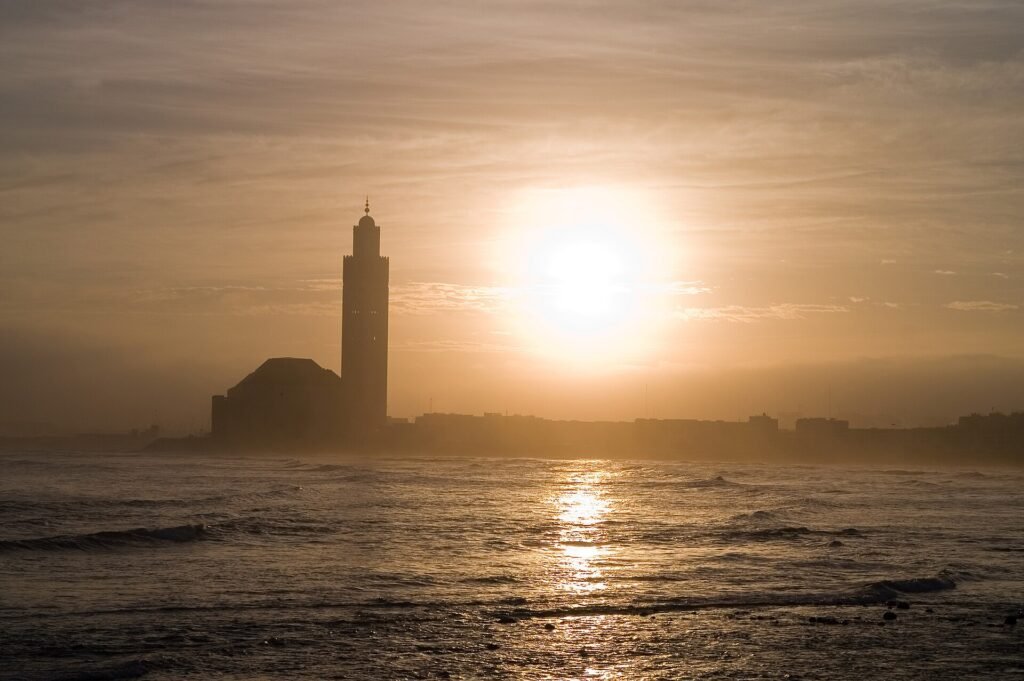
Morocco’s largest city and commercial capital tops most national crime indexes, and it is where residents most often report muggings and burglary. For visitors the practical concerns are pickpocketing around the Casa Port and Casa Voyageurs railway stations, bag snatching near the old medina, and theft on the Corniche at night. Sidi Moumen and Hay Mohammadi have higher reported crime but hold nothing for tourists. Maarif, Gauthier and Anfa, where most visitors stay, feel like any busy European city, and the Hassan II Mosque is unmissable.
2. Marrakech
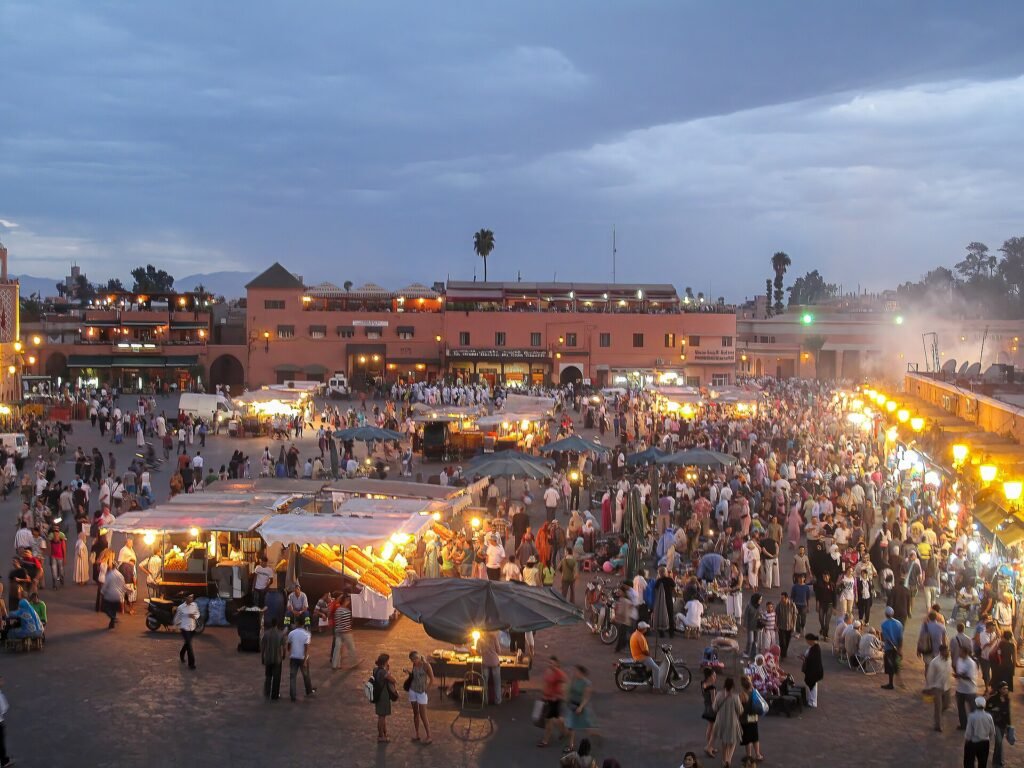
Marrakech is here because of volume rather than severity. It receives more foreign visitors than any other Moroccan city, so it generates the most reports of pickpocketing in the souks, moped bag snatching in medina lanes, and payment disputes with unofficial guides, henna artists and the performers in Jemaa el-Fnaa. The main medina routes are busy until late, but quiet residential alleys are best avoided alone after midnight. Gueliz and Hivernage are relaxed and well lit, and a tourist police unit sits just off the main square.
3. Tangier
Tangier’s reputation is a hangover from its decades as an international free port, and the city has been heavily invested in since the 2000s. It still sits near the top of Moroccan crime indexes, and travellers report more hassle here than elsewhere: touts around the ferry port, pickpockets in the Petit Socco late at night, and people offering hashish. The marina, the Kasbah and the Malabata beachfront are pleasant and busy. Arriving by ferry from Spain, arrange a hotel pick-up rather than negotiating on the quay.
4. Fez
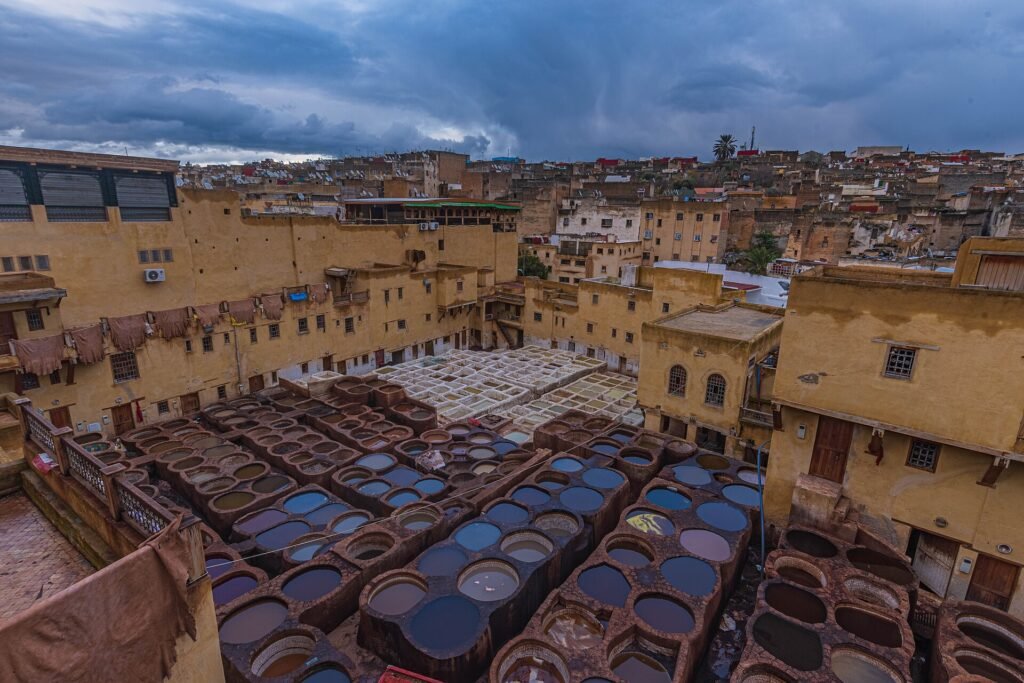
Fez has the largest car-free medieval medina in the world, Fes el-Bali, and its maze of alleys is the reason it is on this list. Getting lost is almost guaranteed, and unofficial guides use that to attach themselves to visitors, demand payment, or lead them into tanneries and carpet shops that pay commission. Pickpocketing is reported around Bab Boujloud. Violent crime against visitors is rare. Hire a licensed guide through your riad for day one so you are not an obvious target.
5. Salé
Salé sits across the Bou Regreg river from Rabat and is effectively the capital’s working-class twin. It has higher reported crime than Rabat, particularly in big housing districts such as Tabriquet and Karia, and an association with radicalisation in the 2000s still colours its reputation. For visitors the concerns are bag snatching and touts in the quiet medina. The Grande Mosquée and the Abu al-Hasan Medersa are beautiful and nearly empty of tourists. Visit in daylight and take the tram back to Rabat in the evening.
6. Agadir
Agadir is a purpose-built beach resort, rebuilt after the 1960 earthquake, and most visitors stay within the seafront bubble of hotels and restaurants. The reported problems are those of any resort: theft from the beach while you swim, pickpocketing in the Souk El Had market, and late-night incidents in the bar district. Talborjt is poorer and less well lit at night. The promenade, the marina and the Kasbah cable car are the safe highlights, and Taghazout’s surf camps are an easy day trip.
7. Tetouan
Tetouan is on this list for reasons that have little to do with visitors. It sits at the edge of the Rif mountains, the heart of Morocco’s cannabis-growing region, and close to the Spanish enclave of Ceuta, so it sees regular police operations against smuggling. Reported street crime against travellers is modest, mostly pickpocketing in the medina and offers of drugs that are best refused firmly. The UNESCO-listed medina has a distinctly Andalusian character, and the beach town of Martil fills with Moroccan families in summer. Avoid the Fnideq border crossing at peak times.
8. Oujda
Oujda is Morocco’s eastern gateway, a few kilometres from the Algerian border, which has been closed since 1994. Its reputation is tied to the smuggling economy that grew up around that frontier. Visitors are rare, so petty crime against them is rarely reported, but the lack of tourist infrastructure means you are on your own if something goes wrong. The medina and Bab Sidi Abdelwahab gate are worth an hour if you are passing through to the Saidia beach resort. Do not approach the border fence and do not accept lifts from strangers heading that way.
9. Meknes
Meknes is quieter than Fez or Marrakech and most visitors find it the most relaxed imperial city. It appears here because reported petty theft in the medina and around Place el-Hedim has grown with tourism, and because the Ville Nouvelle bar district can get rowdy at night. Taxi overcharging between the station and the medina is a common complaint. The Bab Mansour gate, the Heri es-Souani stables and the Roman ruins of Volubilis are the reasons to come.
10. Rabat
The capital is the safest big city in Morocco and is here mainly for completeness. It is the seat of government and the diplomatic quarter, so policing is visible and the central districts of Agdal, Hassan and Hay Riad feel orderly. Reported crime concentrates in outer working-class areas such as Yacoub El Mansour and Takaddoum, which visitors have no reason to enter. The Kasbah of the Udayas, the Hassan Tower and the Chellah necropolis make an easy, low-stress day.
Comparison table
| City | Main concern for visitors | Areas to be careful in | Still worth visiting? |
|---|---|---|---|
| Casablanca | Pickpocketing, bag snatching, burglary | Old medina at night, Sidi Moumen, Hay Mohammadi | Yes, for the Hassan II Mosque and Art Deco centre |
| Marrakech | Pickpockets, moped theft, unofficial guides | Quiet medina alleys after midnight | Yes, the country’s top destination |
| Tangier | Port touts, pickpockets, drug offers | Petit Socco late at night, ferry quay | Yes, especially the Kasbah and marina |
| Fez | Unofficial guides, getting lost, pickpockets | Deep medina lanes alone after dark | Yes, with a licensed guide on day one |
| Salé | Bag snatching, touts | Tabriquet, Karia | Yes, as a day trip from Rabat |
| Agadir | Beach theft, resort nightlife incidents | Talborjt and unlit streets at night | Yes, for beaches and surf day trips |
| Tetouan | Smuggling-related police activity, drug offers | Fnideq border at peak times | Yes, for the UNESCO medina |
| Oujda | Border smuggling economy, little tourist support | Anywhere near the Algerian border fence | Only if passing through to Saidia |
| Meknes | Petty theft, taxi overcharging | Ville Nouvelle bars late at night | Yes, plus Volubilis and Moulay Idriss |
| Rabat | Low overall; outer-district crime | Yacoub El Mansour, Takaddoum | Yes, the easiest city in Morocco |
Practical safety advice for Morocco
Most incidents in Morocco are opportunistic and avoidable. These habits cover almost everything travellers report.
- Carry bags across your body on the side away from the road, because moped snatching happens in medina lanes.
- Agree taxi fares before getting in, or insist on the meter in petit taxis.
- Say “no, thank you” once and keep walking when approached by unofficial guides; conversation is taken as interest.
- Book licensed guides through your riad or the tourist office and ask to see their badge.
- Do not photograph police, military sites or royal palaces, and ask before photographing people.
- Keep your passport in the hotel safe and carry a photocopy.
- Avoid any involvement with hashish, which is illegal despite being widely offered.
Emergency numbers and official sources
Dial 19 for police in towns and cities, 177 for the Royal Gendarmerie in rural areas, and 15 for ambulance and fire. Before you go, check the US State Department’s Morocco page, the UK FCDO’s travel advice, Canada’s travel.gc.ca or Australia’s Smartraveller.
What to do if you are robbed
- Report it to the nearest police or tourist police post and ask for a written report for your travel insurance.
- Cancel bank cards using your bank’s international number, and prefer ATMs inside banks from then on.
- Contact your embassy or consulate in Rabat, Casablanca or Marrakech for an emergency travel document if your passport is taken.
- Keep receipts for replacement items and transport so your insurer can reimburse them.
Travel insurance covering theft, medical treatment and repatriation is strongly recommended, because private clinics expect payment up front. Health risks are modest: avoid tap water outside major hotels, respect summer heat above 40°C in the south, and check the CDC or WHO for recommended vaccinations.
Frequently Asked Questions
Which is the most dangerous city in Morocco?
Casablanca consistently tops Moroccan crime indexes and generates the most reports of muggings and burglary, largely because it is the biggest city. For tourists, Marrakech produces more reported petty crime simply because far more visitors pass through it. Neither comes close to the levels seen in genuinely high-crime cities elsewhere.
Is Morocco safe for solo female travellers?
Many women travel solo in Morocco without serious incident, but verbal street harassment is common and is the issue women report most. Dressing modestly, avoiding empty alleys at night and choosing well-reviewed riads reduce the hassle. Rabat, Essaouira and Chefchaouen are noticeably calmer than Marrakech, Fez and Tangier.
Is it safe to walk in the Marrakech medina at night?
The main lanes and Jemaa el-Fnaa are busy and well lit until late and are fine to walk. The quieter residential alleys are poorly lit and where bag snatching is more often reported, so stick to main routes or take a petit taxi after midnight. Ask your riad for a landmark to navigate by, because street names are rarely visible.
Should I worry about terrorism in Morocco?
The Level 2 rating from the US State Department reflects a general risk rather than a specific threat. The last major attack on tourists was in the High Atlas in 2018, and Morocco’s security services are regarded as effective. Stay aware in crowded places and follow local news, but the everyday risk to visitors is petty crime.
Bottom line
Morocco’s “dangerous” cities would be mid-table in most European countries. Keep valuables out of sight, agree prices before you commit, use licensed guides and respect border zones, and you can visit every city here with confidence. For the habits that keep you safe anywhere, read our guide to staying safe when travelling abroad, or compare the region’s other big draw in whether Egypt is safe in 2026.