New York is far safer than its reputation, and the safest neighborhoods in New York City are among the safest urban areas in the country. The NYPD publishes crime data for every precinct through CompStat 2.0 and the city’s online crime map, and the same handful of areas sit at the bottom of those tables year after year: quiet residential districts with strong community ties, busy sidewalks, good lighting and, often, a geographic buffer such as a river, a park or a highway.
This guide ranks ten of them across four boroughs. For each you will find the character of the area, who it suits, what the housing looks like, why it feels safe, and a cost tier from affordable (by New York standards) to premium. We describe safety qualitatively rather than quoting crime rates, because precinct figures shift from quarter to quarter and the official map is always the place to check current numbers.
Whether you are moving, booking a longer stay or choosing where to base a visit, these are the neighborhoods where you can walk home at midnight without a second thought.
Contents
How we chose these neighborhoods
We started with the precincts that consistently report the lowest index crime per resident on the NYPD’s public data, then weighed what people who live there say about walking at night, street lighting, foot traffic and community life. We also looked for practical appeal, meaning subway access, parks and schools, so every entry is somewhere you would actually want to live. Nothing here is a guarantee; even the calmest block has the occasional incident, and the NYC Crime Map is the right tool for checking a specific address.
The 10 safest neighborhoods in New York City
1. Upper East Side, Manhattan
Stretching from 59th to 96th Street between Central Park and the East River, the Upper East Side is covered by the 19th Precinct, which regularly reports among the lowest crime per resident in Manhattan. Doorman buildings, private schools and the Museum Mile give it a calm, well-kept feel, and the Second Avenue subway has made the eastern blocks much more convenient. It suits families, professionals and anyone who wants quiet streets ten minutes from Midtown. Housing is mostly prewar co-ops and postwar rentals. Cost tier: premium west of Third Avenue, mid in Yorkville toward the river.
2. Upper West Side, Manhattan
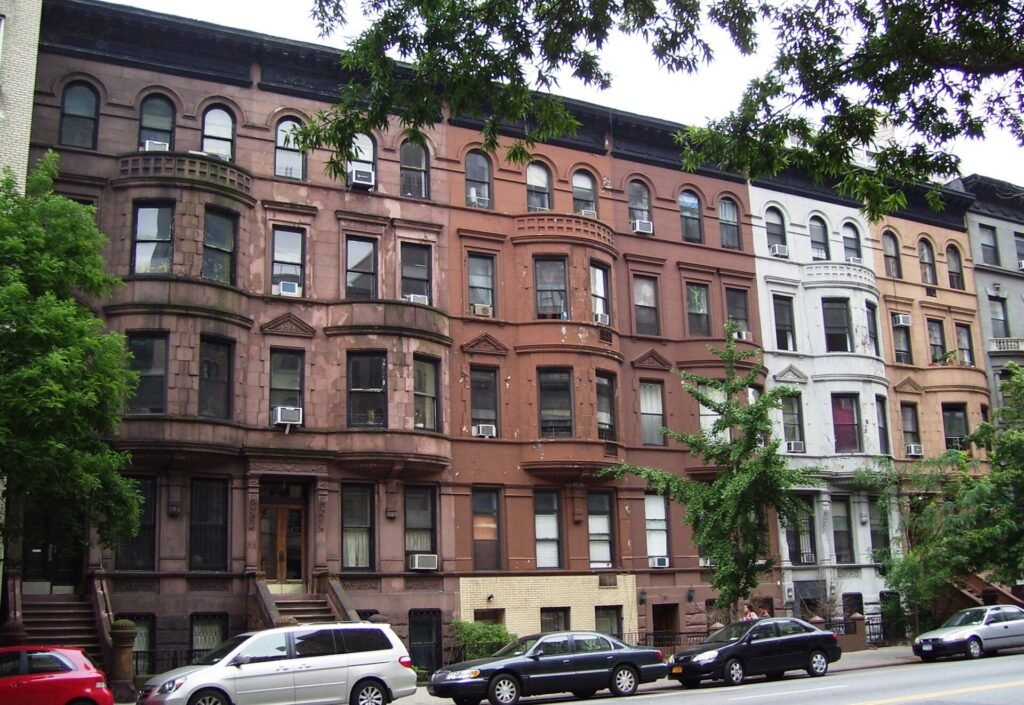
Bounded by Central Park and Riverside Park, the Upper West Side is leafy, intellectual and full of strollers. The brownstone side streets are quiet but never empty, Broadway is lit and busy until late, and two subway lines run its length. Lincoln Center, the American Museum of Natural History and Zabar’s deli anchor the neighborhood’s identity. It suits families and anyone who wants green space on both sides. Housing ranges from grand prewar apartments to walk-ups. Cost tier: premium.
3. Battery Park City, Manhattan
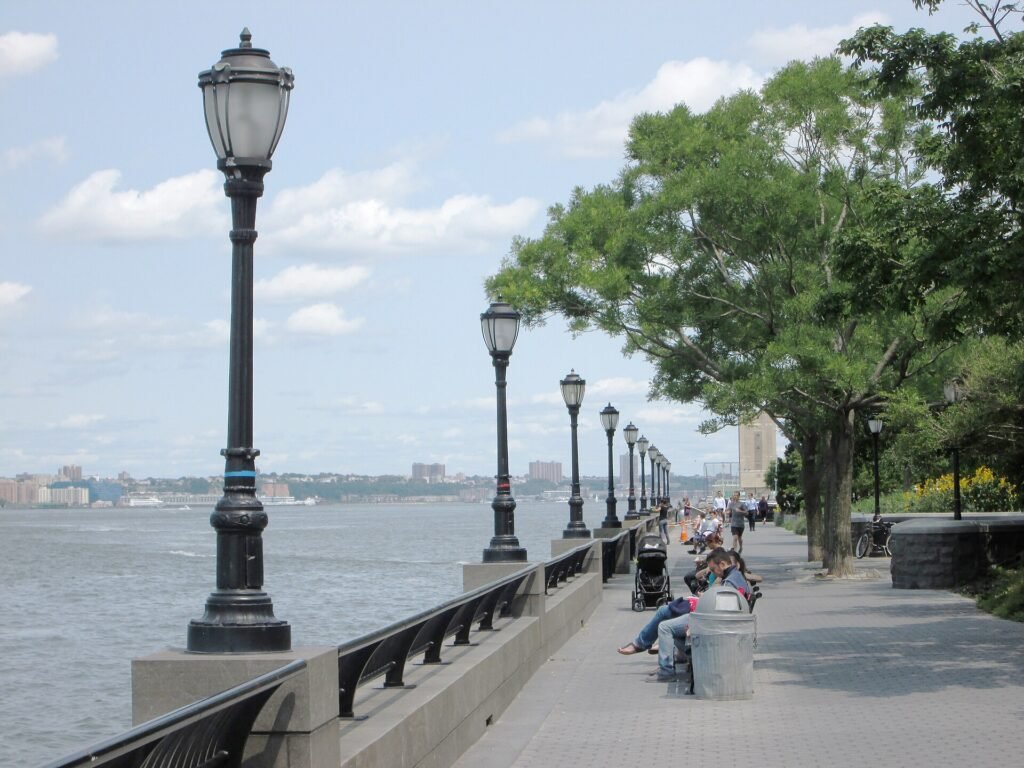
Built on landfill at the southern tip of Manhattan, Battery Park City is a planned community of waterfront apartment towers, playgrounds and esplanades managed by a state authority that keeps it immaculate. Its separation from the rest of Lower Manhattan by West Street, plus 24-hour building staff and parks patrols, give it a low reported crime record. It suits families with young children and finance workers who want to walk to work. Housing is almost entirely modern full-service rentals and condos. Cost tier: premium.
4. Tribeca, Manhattan
Tribeca’s converted warehouses and cobbled streets have become some of the most expensive real estate in the country, and the neighborhood is correspondingly well maintained, well lit and lightly trafficked at night. The 1st Precinct, which also covers the Financial District, reports low violent crime. It suits established professionals and families drawn by PS 234 and the Hudson River Park waterfront. Housing is loft condos and a few new towers. Cost tier: premium, at the very top of the city.
5. Roosevelt Island, Manhattan
This narrow island in the East River is reached by tram, subway or a single bridge from Queens, and that limited access is part of why it feels so secure. It has its own public safety department, a car-light main street, and a mixed community of families, UN staff and Cornell Tech students. Housing is mostly mid-rise rental and co-op buildings along Main Street, with newer towers near the campus. It suits people who want calm and views without leaving Manhattan. Cost tier: mid.
6. Brooklyn Heights, Brooklyn
New York’s first historic district is a grid of brownstones and carriage houses on a bluff above the East River, with the Brooklyn Heights Promenade and Brooklyn Bridge Park below. The 84th Precinct reports low crime for the Heights itself, and the area’s active neighborhood association keeps streets lit and maintained. It suits families, lawyers from the nearby courts and anyone who wants a village feel one subway stop from Manhattan. Housing is brownstone floor-throughs and prewar co-ops. Cost tier: premium.
7. Park Slope, Brooklyn
Park Slope runs down the western edge of Prospect Park and is defined by its brownstone blocks, food co-op, independent shops along Seventh and Fifth Avenues and an unusually engaged community. The 78th Precinct reports some of the lowest violent crime in Brooklyn. Sidewalks are busy with families until well into the evening. It suits families above all, plus anyone who wants park access and a walkable main street. Housing is brownstones, many divided into apartments, and some new condos near Fourth Avenue. Cost tier: premium, with mid-tier pockets on the southern slope.
8. Forest Hills, Queens
Forest Hills Gardens, a planned community of Tudor houses and winding private streets, gives this neighborhood its character, but the apartment blocks along Queens Boulevard and the lively shopping on Austin Street are where most residents live. The 112th Precinct consistently reports among the lowest crime in Queens. Express subway and Long Island Rail Road service make it a 20-minute commute to Midtown. It suits families and commuters who want space and quiet. Housing is co-ops, rentals and single-family homes. Cost tier: mid.
9. Bayside, Queens
Bayside, in northeast Queens near the Nassau County line, is as suburban as New York City gets: detached houses, driveways, strong public schools and a waterfront along Little Neck Bay. The 111th Precinct is routinely one of the lowest-crime precincts in the city. The trade-off is transport: it is served by the Long Island Rail Road and express buses rather than the subway. It suits families who want a yard and a quiet street inside city limits. Housing is single-family homes, co-ops and garden apartments. Cost tier: mid, and affordable for a house by city standards.
10. Riverdale, Bronx
Riverdale sits on the wooded hills of the northwest Bronx above the Hudson, and its large homes, private schools and parkland, including Wave Hill and Van Cortlandt Park, make it feel closer to Westchester than to the rest of the borough. The 50th Precinct reports low crime, especially in the Fieldston and North Riverdale sections. It suits families and retirees who want space and nature with Metro-North and express bus links to Manhattan. Housing is a mix of houses, co-op towers and rentals on Johnson Avenue. Cost tier: mid.
Summary table
| Neighborhood | Vibe | Best for | Cost tier |
|---|---|---|---|
| Upper East Side | Polished, quiet, museum-adjacent | Families, professionals | Premium / mid in Yorkville |
| Upper West Side | Leafy, cultural, stroller-friendly | Families, park lovers | Premium |
| Battery Park City | Planned waterfront, immaculate | Young families, finance workers | Premium |
| Tribeca | Loft living, cobbled streets | Established professionals | Premium |
| Roosevelt Island | Calm, car-light, island feel | Families, students, UN staff | Mid |
| Brooklyn Heights | Historic brownstones, promenade | Families, commuters | Premium |
| Park Slope | Community-minded, park-side | Families | Premium / mid on the south slope |
| Forest Hills | Tudor gardens, village high street | Families, commuters | Mid |
| Bayside | Suburban, waterfront, schools | Families wanting a house | Mid / affordable for a house |
| Riverdale | Hilly, green, Hudson views | Families, retirees | Mid |
How to check a neighborhood yourself
A list is a starting point. Before you sign a lease or book a month-long stay, spend an hour on these steps.
- Open the NYC Crime Map and look at the precinct and the specific blocks, not just the neighborhood name, because conditions change at major avenues.
- Walk the block at 10pm on a weeknight and note the lighting, foot traffic and whether shops are still open.
- Check the nearest subway entrance and how far you would walk from it after dark.
- Read the community board minutes and the neighborhood’s local news site for what residents are actually complaining about.
- Ask the building’s doorman or super about package theft and building security, which are the issues that affect daily life most.
Costs to budget for beyond rent
Safe neighborhoods in New York are rarely cheap, and the move itself has costs people underestimate. This is general information, not financial advice.
- Broker fees: as of 2026 the FARE Act requires the party who hires a broker, usually the landlord, to pay, but check the listing, because some fees still reach tenants indirectly through rent.
- Security deposit: capped at one month’s rent for most apartments under state law.
- Renters insurance: many buildings require it, and it is inexpensive relative to what it covers.
- Credit and income checks: landlords typically ask for income of roughly 40 times the monthly rent, and newcomers without a US credit history may need a guarantor or a guarantor service.
- Moving and furnishing: walk-ups and buildings with elevator reservation rules can add to moving costs, so ask before booking a date.
If you are relocating from abroad, open a US bank account early, because many landlords want to see local statements, and compare international transfer services rather than wiring through your home bank. Current rent ranges move quickly; check StreetEasy or Zillow for live listings and Numbeo for a rough cost-of-living comparison.
Frequently Asked Questions
What is the safest neighborhood in New York City?
By reported crime per resident, outer-borough precincts such as Bayside in Queens and Riverdale in the Bronx usually report the fewest incidents. Within Manhattan, the Upper East Side and Battery Park City are the perennial answers. The safest choice for you depends on whether you need a subway, a yard or a short walk to work.
Is Manhattan or Brooklyn safer?
Neither borough is uniformly safer; both contain some of the city’s calmest and busiest precincts. Brooklyn Heights and Park Slope compare favorably with any Manhattan neighborhood, while parts of each borough report far more incidents. Judge by precinct and block, not borough.
Is the subway safe at night?
Millions of people ride it daily and serious incidents are rare, but late-night platforms can be nearly empty. Ride in the conductor’s car, near the middle of the train, stay off your phone near the platform edge, and consider a car service for trips after 1am if you are alone.
Which safe neighborhoods are most affordable?
Bayside, Forest Hills, Riverdale and Roosevelt Island offer the best balance of low reported crime and mid-tier rents. Yorkville, the eastern part of the Upper East Side, is the most affordable way into a very safe Manhattan precinct, particularly for studios and one-bedrooms.
How does New York compare with other big US cities for safety?
New York’s violent crime per resident is lower than most large American cities, and its calmest neighborhoods rival anywhere in the country. If you are comparing cities, our guides to the safest neighborhoods in Chicago and the safest neighborhoods in Los Angeles use the same approach, and our pros and cons of living in Philadelphia covers the nearest big alternative.
Bottom line
The safest neighborhoods in New York City share the same traits: active sidewalks, good lighting, engaged residents and a natural edge that keeps through traffic out. Pick the one that matches your budget and commute, verify the block on the NYPD’s map, and you will find the city far calmer than its reputation. For habits that keep you safe in any unfamiliar city, see our guide to staying safe when traveling abroad.