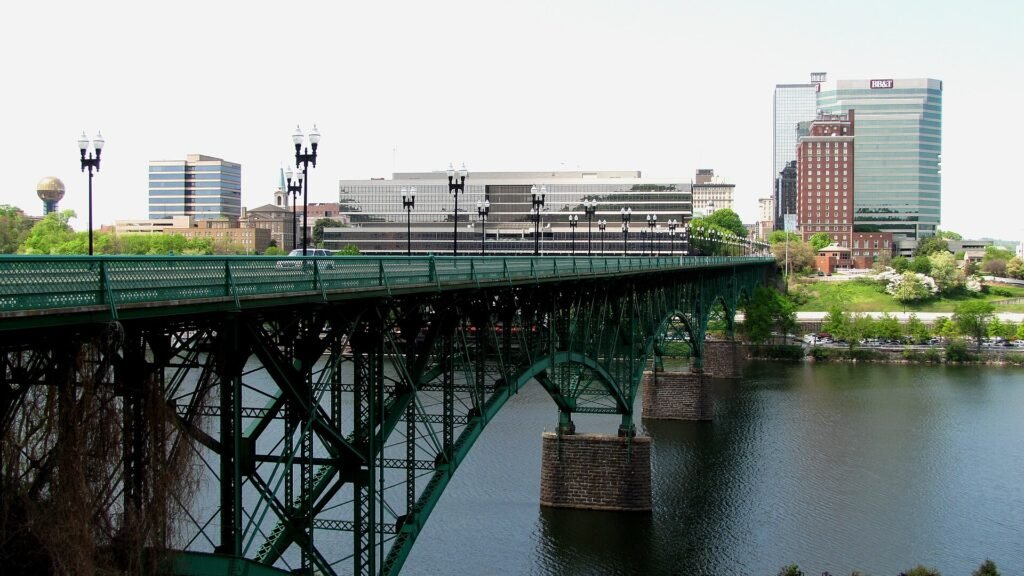
The pros and cons of living in Knoxville, Tennessee, come down to a simple pitch: a mid-sized Southern city with no state income tax, a big university, a lively downtown and the Great Smoky Mountains less than an hour away, at a cost of living that remains below the national average. That pitch has worked. Knoxville has been one of the fastest-growing metros in the Southeast since 2020, with newcomers arriving from Florida, California, the Midwest and the Northeast.
The growth has consequences. Home prices rose faster in Knoxville than in almost any comparable city in the early 2020s, wages did not keep up, the interstates are now congested, and the city is still largely car-dependent. Add humid summers, famously bad pollen and a hospital and school picture that is good but not elite, and you have a city with clear strengths and equally clear limits.
Here are 16 pros and cons, eight on each side, covering cost of living, housing, jobs, weather, commuting, schools, healthcare, culture, safety and the outdoors, followed by a cost snapshot table and a step-by-step plan for making the move.
Contents
Why are people moving to Knoxville?
Three reasons dominate: cost, taxes and mountains. Knoxville is still cheaper than Nashville, Asheville or Chattanooga for housing, Tennessee has no tax on wage income, and the city is the gateway to the most-visited national park in the US.
The pros of living in Knoxville
1. No state income tax on wages
Tennessee does not tax earned income, and the old tax on interest and dividends was fully phased out in 2021. The state relies instead on a high sales tax, around 9.25 percent in Knox County, so the saving is largest for higher earners. Check the Tennessee Department of Revenue for current rates.
2. The Smokies and a city-wide trail network
Great Smoky Mountains National Park is roughly 45 minutes to an hour from downtown, with the Cades Cove loop, Clingmans Dome and hundreds of miles of hiking. Inside the city, the Urban Wilderness in South Knoxville packs more than 50 miles of hiking and mountain-biking trails around Ijams Nature Center and Mead’s Quarry.
3. Housing is still cheaper than most of the Southeast
As of 2026, the median home price in the Knoxville area sits roughly in the $320,000 to $380,000 range, with older homes in North and South Knoxville below that and newer builds in Farragut and Hardin Valley above. A one-bedroom apartment typically rents for $1,100 to $1,500. Prices have risen fast but remain well below Nashville, Asheville and most larger metros. Check Zillow or Realtor.com for current data.
4. A lively, walkable downtown
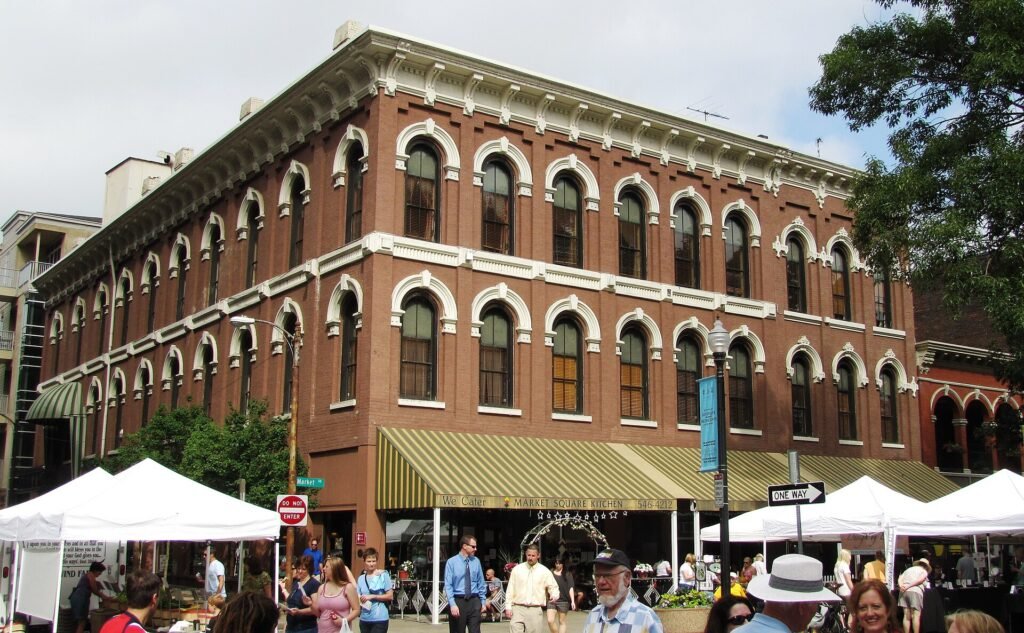
Market Square, Gay Street and the Old City have been transformed over the past twenty years into a dense cluster of restaurants, breweries, music venues and independent shops. The restored Tennessee Theatre and Bijou Theatre host concerts and touring shows, and the riverfront is being redeveloped around a new baseball stadium.
5. Stable jobs in science, energy and healthcare
Oak Ridge National Laboratory, about 25 miles west, is one of the largest science labs in the country and draws engineers and researchers from around the world. The Tennessee Valley Authority is headquartered downtown, the University of Tennessee is a major employer, and Covenant Health, the University of Tennessee Medical Center and Tennova run large hospital systems. Check employers’ official careers pages for current openings.
6. A four-season climate with mild winters
Knoxville gets real seasons without the extremes. Spring is long and green, fall colors in the surrounding hills are spectacular, and winter highs often sit in the 40s and 50s°F with only occasional snow. For people fleeing Northern winters, that is a major draw, although the summers require a tolerance for humidity.
7. College-town energy and SEC sports
The University of Tennessee’s roughly 36,000 students keep the city young, and Neyland Stadium on a football Saturday, with more than 100,000 fans in orange, is one of the great spectacles in American sport.
8. Friendly, easy-going culture
Newcomers consistently describe Knoxville as welcoming. It sits at the junction of Appalachian, Southern and university cultures, which makes it less buttoned-up than some Southern cities and less transient than Nashville. The local music scene, from the Big Ears Festival to bluegrass nights, is far stronger than the city’s size suggests.
The cons of living in Knoxville
Knoxville’s weaknesses are those of a sprawling, car-centric Southern city that has grown faster than its infrastructure and wages.
9. Humid summers and some of the worst pollen in the country
July and August bring highs in the upper 80s to mid 90s°F with heavy humidity, and the Tennessee Valley’s bowl shape traps both heat and haze. Knoxville regularly appears near the top of allergy-capital lists published by the Asthma and Allergy Foundation of America, with intense tree pollen in spring and ragweed in fall.
10. You will need a car for almost everything
Knoxville Area Transit runs buses on the main corridors and a free downtown trolley, but coverage is thin and infrequent outside the center. The city is spread across hills and valleys with few sidewalks in the suburbs. Living car-free is realistic only downtown, in the Old City or near campus.
11. Wages lag the rising cost of living
Median household income in Knoxville is below the national average, while home prices have roughly doubled since the mid-2010s. Outside ORNL, TVA, healthcare and senior university roles, salaries are modest.
12. Interstate congestion and tourist traffic
I-40 and I-75 merge through the city, and the downtown interchange, long nicknamed Malfunction Junction, backs up daily. On weekends and holidays, traffic to Pigeon Forge and Gatlinburg clogs the roads toward the Smokies.
13. Public schools are solid but uneven
Knox County Schools has well-regarded schools in Farragut, West Knoxville and Hardin Valley, and magnet programs such as the L&N STEM Academy downtown. Results in parts of the inner city and East Knoxville are weaker, and families often pay a premium to be zoned for Farragut High or Hardin Valley Academy. Compare schools on the Tennessee Department of Education report card site.
14. Safety varies by neighborhood
Knoxville has lower reported violent crime than Memphis or Nashville, but some neighborhoods, including parts of East Knoxville and areas along Magnolia Avenue and in Lonsdale, have had persistently higher reported incidents, and property crime is a citywide concern. Use the Knoxville Police Department’s public crime data and visit in person. Our guide to the most dangerous cities in the world explains how to read these numbers in context.
15. Limited flight options
McGhee Tyson Airport is easy to use but small, with nonstop flights mostly to major hubs. International travel and many domestic trips mean a connection through Atlanta, Charlotte or Chicago.
16. Severe weather and air quality days
East Tennessee sees severe thunderstorms and occasional tornadoes in spring, flash flooding in the hills, and periodic ice storms that can knock out power for days. The valley geography also traps ozone and particulates in summer; check the EPA’s AirNow site on hazy days.
Cost of living in Knoxville: a snapshot
These are hedged ranges as of 2026. Confirm current figures on Numbeo, Zillow, Apartments.com and the Knox County property assessor’s site before you budget.
| Expense | Typical range (USD, monthly unless stated) | Notes |
|---|---|---|
| One-bedroom rent, downtown or the Old City | $1,400–1,900 | Newer loft conversions at the top end |
| One-bedroom rent, North Knoxville, Bearden or Fountain City | $1,000–1,400 | Older complexes cheaper; campus-area units spike in August |
| Median home sale price (metro) | $320,000–380,000 | Farragut and Sequoyah Hills well above; North and East Knoxville below |
| Property tax on a typical home | Roughly $2,000–3,500 per year | Lower than many Northern states; check the assessor |
| Utilities, two-bedroom | $150–250 | KUB power; summer air-conditioning is the main cost |
| KAT monthly bus pass | Around $50 | Check Knoxville Area Transit’s fare page for current pricing |
| Groceries, one person | $350–450 | Kroger, Food City, Publix and Aldi dominate |
| Combined sales tax | Around 9.25% | No state income tax on wages |
Where should you live in Knoxville?
The city is really a set of distinct areas separated by ridges and the river, so your neighborhood determines your commute and your lifestyle.
- Walkable and lively: Downtown, the Old City, Fort Sanders near campus.
- Historic and family-friendly: Fourth and Gill, Old North Knoxville, Sequoyah Hills, Island Home.
- Established West Knoxville: Bearden, West Hills, Rocky Hill.
- Top school zones and new builds: Farragut, Hardin Valley, Karns.
- Best value: Fountain City, North Knoxville, South Knoxville near the Urban Wilderness, Powell.
Comparing options? See the pros and cons of living in Tacoma for another mountain-adjacent, no-income-tax city with a very different climate, the pros and cons of living in Columbus for a larger Midwestern college capital, and the pros and cons of living in Philadelphia if you want a big walkable city at a modest price.
How to move to Knoxville: a step-by-step plan
- Sort out income first. Knoxville is best for remote workers, ORNL and TVA hires, healthcare professionals and university staff. If you need a local job in another field, research salaries realistically before committing.
- Visit in late July and again in October. You need to know how you handle the humidity, and you should see the fall colors that make locals forgive the summer.
- Choose a side of town based on your commute. West Knoxville toward Oak Ridge, South Knoxville for the Urban Wilderness, North for value and Farragut for schools. Test the drive at 5pm.
- Check school zones and crime data before you buy. Use the Knox County Schools zone finder, the state report card site and the Knoxville Police Department’s public data.
- Get pre-approved and move quickly. Well-priced homes still receive multiple offers.
- Handle the practicalities. Transfer your license at the Tennessee Department of Safety, register your vehicle with the Knox County Clerk, and set up power and water with the Knoxville Utilities Board.
Frequently Asked Questions
Is Knoxville a good place to live?
For outdoor-oriented people who want a lower cost of living, no state income tax and a lively college-town downtown, it is one of the better mid-sized cities in the Southeast. The compromises are humidity, pollen, car dependency and wages that trail housing costs.
How much do you need to earn to live comfortably in Knoxville?
A single renter can live comfortably on roughly $50,000 to $65,000 a year as of 2026, and a family looking to buy in Farragut or West Knoxville will generally want a household income above $100,000.
Is Knoxville safe?
Overall reported violent crime is lower than in Tennessee’s larger cities, and most neighborhoods feel comfortable day to day. A few areas have had persistently higher reported incidents, and property crime is the most common concern. Check the Knoxville Police Department’s crime data and visit areas in person.
How far is Knoxville from the Smoky Mountains?
The park’s Townsend and Gatlinburg entrances are roughly 45 minutes to an hour from downtown in normal traffic. On peak fall weekends and holidays the drive through Pigeon Forge can take considerably longer.
What is the weather like in Knoxville?
Hot, humid summers in the upper 80s and 90s°F, mild winters with occasional snow and ice, and long, beautiful springs and falls. Severe storms are possible in spring, and pollen counts are among the highest in the country.
The bottom line on living in Knoxville
Knoxville delivers mountains, a real downtown, big-time college sports and a tax structure that lets you keep more of your paycheck, at prices that are still reasonable by national standards. You pay in humidity, pollen, traffic and the need to drive everywhere, and local wages have not kept pace with the housing boom. For remote workers, scientists, healthcare professionals and anyone who wants the Smokies as a weekend habit, it is a strong choice.