Chicago’s crime headlines describe a handful of neighborhoods, not the city, and the safest neighborhoods in Chicago report violent crime levels comparable to quiet suburbs. The Chicago Police Department publishes incident data for all 77 community areas on the city’s open data portal, and the same places sit at the calm end of the table year after year: the lakefront North Side, the leafy bungalow belt of the far Northwest Side, and a pair of close-knit communities on the far South Side that many people outside the city have never heard of.
This guide ranks ten of them. For each you get the neighborhood’s character, who it suits, the typical housing, what makes it feel safe on the ground, the amenities nearby and a cost tier from affordable to premium. We keep safety descriptions qualitative, because community-area figures change month to month and the city’s data portal and the CPD’s public map are where you should check a specific address.
If you are relocating for work, choosing a base for a long stay, or deciding where to buy, these are the neighborhoods where residents walk the dog at 11pm without a second thought.

Contents
How we chose these neighborhoods
We began with the community areas that consistently report the lowest violent and property crime per resident on the city’s open data, then layered on what residents say about lighting, foot traffic, block clubs and how comfortable they feel walking at night. Finally we filtered for practicality: CTA or Metra access, parks, schools and a main street with life in it. A neighborhood that is quiet because nobody is around is not the same as one that is safe because everybody is.
The 10 safest neighborhoods in Chicago
1. Lincoln Park
Lincoln Park combines the city’s most-used lakefront park, a free zoo, DePaul University and some of the priciest houses in Illinois. Armitage, Halsted and Clark are busy and lit until late, and the sheer density of residents, students and dog walkers keeps the side streets from ever feeling empty. It suits young professionals, families and anyone who wants the lake on their doorstep. Housing runs from vintage walk-ups and greystones to large single-family rebuilds. Cost tier: premium.
2. Lakeview
Just north of Lincoln Park, Lakeview is bigger, livelier and slightly cheaper, taking in Wrigleyville, the Southport Corridor and the Northalsted entertainment district. Its reported crime is mostly theft linked to game days and nightlife; residential streets west of Clark are calm. Red and Brown Line stops, the lakefront trail and endless restaurants give it everything you need within a few blocks. It suits renters in their twenties and thirties and families in the Southport area. Housing is mostly condos, two-flats and courtyard apartments. Cost tier: mid to premium.
3. Streeterville
Streeterville is the high-rise district between the Magnificent Mile and the lake, home to Northwestern Memorial Hospital, Navy Pier and the Museum of Contemporary Art. Its reported crime is mostly retail theft on Michigan Avenue, and the residential towers themselves are staffed around the clock. The streets are lit, patrolled and full of hospital staff at every hour. It suits medical professionals, downtown workers and visitors who want to walk everywhere. Housing is almost entirely full-service condo and rental towers. Cost tier: premium.
4. North Center
North Center, which includes Roscoe Village and St. Ben’s, is a family neighborhood of brick two-flats and single-family homes around Welles Park. The Brown Line runs along its edge, the Roscoe Street strip has a village feel, and strong public schools such as Coonley and Bell draw parents who then stay for decades. Reported crime is low and mostly property-related. It suits families and anyone priced out of Lincoln Park who still wants the North Side. Housing is two-flats, frame houses and new construction. Cost tier: premium, slightly below Lincoln Park.
5. Lincoln Square
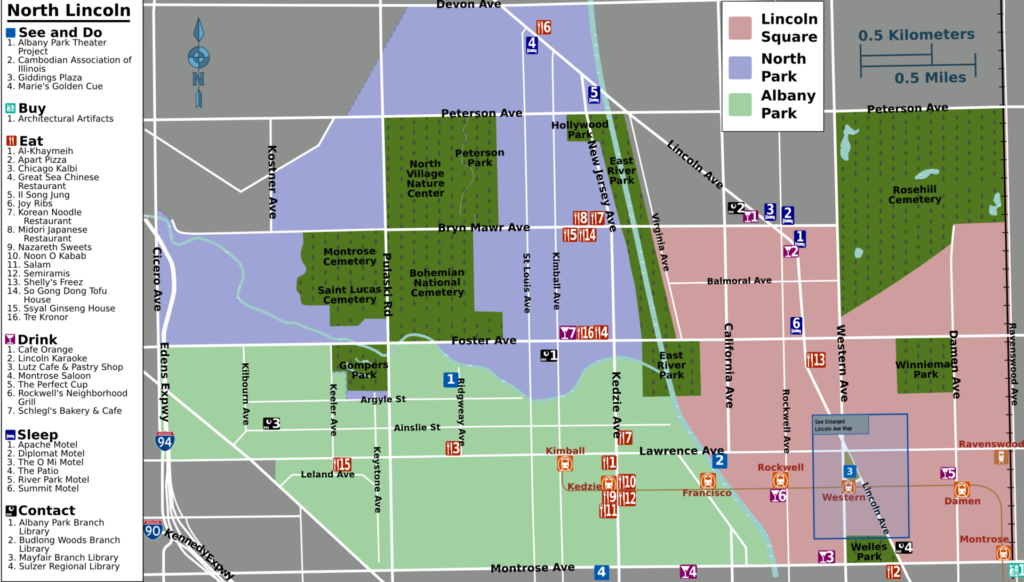
Lincoln Square’s German heritage survives in Giddings Plaza, the Old Town School of Folk Music and a main street of independent shops along Lincoln Avenue. It is one of the most walkable neighborhoods on the North Side, with the Western Brown Line stop in the middle and the river and Winnemac Park at the edges. Reported crime is low and residents are visibly active in block clubs. It suits families, musicians and people who want a small-town main street in the city. Housing is courtyard apartments, two-flats and bungalows. Cost tier: mid.
6. Edison Park
Edison Park is the city’s northwestern-most neighborhood, tucked against Park Ridge and Niles, and it is known for the number of police officers, firefighters and teachers who live there to satisfy the city’s residency rule. That gives it an unusually watchful, neighborly feel. The Metra stop puts the Loop 25 minutes away, and the short Northwest Highway strip has bars and family restaurants. It suits families and city employees who want a suburban street. Housing is brick bungalows, Georgians and split-levels with yards. Cost tier: mid, and affordable for a house.
7. Norwood Park
Norwood Park neighbors Edison Park and shares its character: curving streets, mature trees, the oldest house in Chicago at the Noble-Seymour-Crippen House, and two Metra stations. It consistently reports among the lowest crime of any community area, and the main complaint from residents is traffic on Harlem Avenue rather than anything criminal. It suits families, retirees and anyone commuting to O’Hare. Housing is bungalows, Cape Cods and larger mid-century homes. Cost tier: mid.
8. Forest Glen
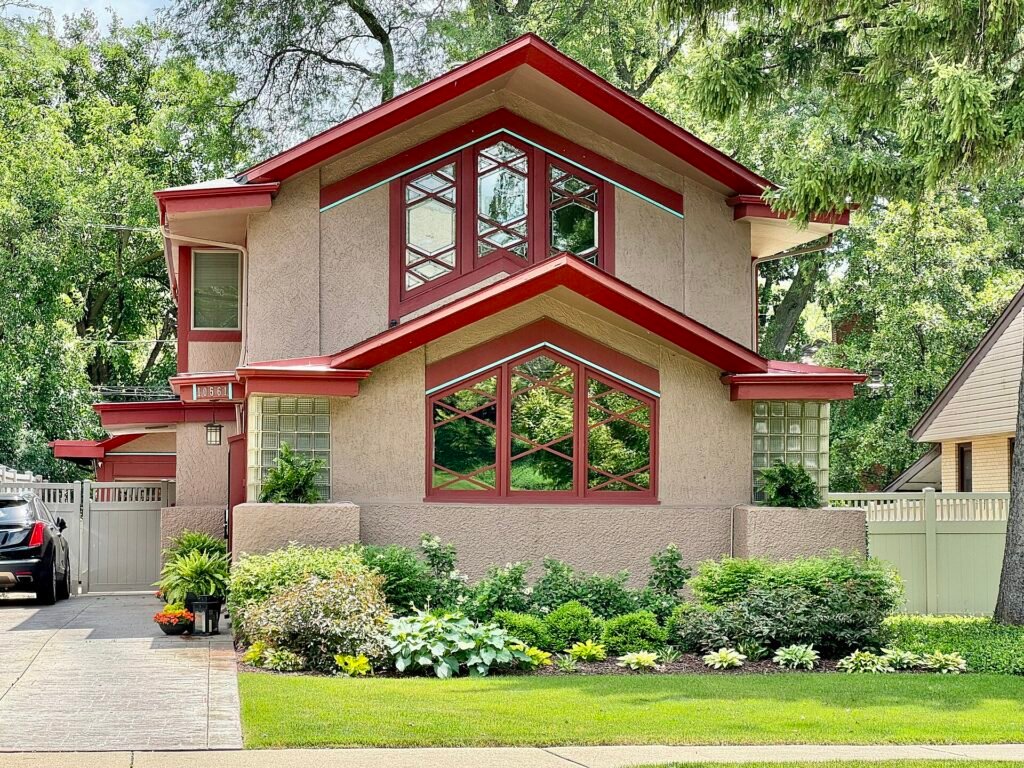
Forest Glen is the community area that includes Sauganash and Edgebrook, and it is bounded by forest preserves and the North Branch of the Chicago River, which keeps through traffic out almost entirely. Large lots, Tudor and colonial houses and the Sauganash Trail give it a wooded, suburban atmosphere. Reported crime is consistently among the lowest in the city. It suits established families and anyone who wants trees and quiet with a Metra ride to downtown. Housing is single-family homes, many on generous lots. Cost tier: premium for the far Northwest Side.
9. Beverly
Beverly sits on the Blue Island Ridge on the far South Side and looks like nowhere else in Chicago: hills, winding streets, a castle on Longwood Drive and the largest urban historic district in the country. It is a long-standing Irish-American and increasingly diverse community with a fierce civic streak, strong parish and public schools, and the Metra Rock Island line running through it. Reported crime is low and residents are quick to point out how little the South Side label fits. It suits families and anyone wanting a house with character. Housing is historic homes of every style. Cost tier: mid.
10. Mount Greenwood
West of Beverly on the city’s southwestern edge, Mount Greenwood is a compact community of brick bungalows and ranch houses that, like Edison Park, is home to a large share of the city’s police and fire families. The Chicago High School for Agricultural Sciences and its working farm are an unexpected landmark. Reported crime is among the lowest in the city, and the main downside is transport: it relies on buses and the 111th Street Metra stop in neighboring Beverly. It suits families who want a yard on a tight budget. Housing is single-family homes. Cost tier: affordable.
Summary table
| Neighborhood | Vibe | Best for | Cost tier |
|---|---|---|---|
| Lincoln Park | Lakefront, lively, polished | Professionals, families | Premium |
| Lakeview | Big, busy, nightlife and lake | Young renters, Southport families | Mid to premium |
| Streeterville | High-rise, walkable downtown | Medical staff, downtown workers | Premium |
| North Center | Family blocks, strong schools | Families | Premium |
| Lincoln Square | Walkable village main street | Families, creatives | Mid |
| Edison Park | Suburban, neighborly, city-employee heavy | Families, city workers | Mid / affordable for a house |
| Norwood Park | Quiet, leafy, Metra-connected | Families, retirees, O’Hare commuters | Mid |
| Forest Glen | Wooded, large lots, secluded | Established families | Premium |
| Beverly | Historic, hilly, civic-minded | Families wanting character | Mid |
| Mount Greenwood | Compact bungalow community | Budget-conscious families | Affordable |
How to vet a Chicago block before you commit
Chicago changes block by block, and the official data makes it easy to check for yourself.
- Search the address on the City of Chicago Data Portal’s crime dataset or the CPD’s public map and filter to the last 12 months.
- Look up the community area and police district, then compare with a neighboring area so you understand what “low” means locally.
- Visit after dark, ideally on a Friday, and note lighting, open businesses and whether people are out walking.
- Check the walk from the nearest CTA or Metra stop, because the last three blocks matter more than the neighborhood average.
- Ask the alderman’s office or the local block club what residents are raising; package theft and car break-ins are the most common issues in calm areas.
Costs to budget for
Chicago is cheaper than New York or Los Angeles, but a safe neighborhood still carries costs beyond rent. This is general information, not financial advice.
- Move-in fees: many Chicago landlords charge a non-refundable move-in fee instead of a security deposit, so ask which applies.
- Renters insurance: inexpensive and often required by larger buildings.
- Heating: older two-flats with gas furnaces can be costly in January; ask for a year of utility history.
- Property taxes: if you are buying, Cook County taxes are a significant part of the monthly cost and are reassessed on a cycle, so build in a margin.
- Parking: permit zones and garage fees apply across the North Side, while the Northwest and far South Side neighborhoods usually have driveways.
If you are arriving from abroad, open a US bank account early so landlords can see local statements, and compare dedicated international transfer services against your bank’s wire fees. For current rent ranges check Zillow, Apartments.com or Domu, and use Numbeo for a rough cost-of-living comparison with your current city.
Frequently Asked Questions
Which Chicago neighborhood has the lowest crime?
On the city’s own data, the far Northwest Side community areas of Edison Park, Norwood Park and Forest Glen, along with Mount Greenwood on the Southwest Side, usually report the fewest incidents per resident. They are also the least dense, which is part of the explanation.
Is the North Side really safer than the South Side?
As a generalization it is misleading. Beverly and Mount Greenwood on the far South Side report crime as low as anywhere on the North Side, while parts of the North Side see plenty of theft. Judge by community area and block, not by compass direction.
Is the CTA safe at night?
Most riders have no trouble, and the Brown and Red lines through these neighborhoods are busy until late. Sit near other passengers, keep your phone out of sight on platforms, and consider a rideshare after midnight if you are alone or the train would be nearly empty.
Can I find a safe neighborhood in Chicago on a budget?
Yes. Mount Greenwood, Edison Park and Norwood Park offer low reported crime with house prices and rents well below the North Side lakefront. The trade-off is a longer commute and fewer bars and restaurants within walking distance.
How does Chicago compare with other cities for safe neighborhoods?
Chicago’s calmest areas are as safe as anything in the US; the difference is that its highest-crime areas are more concentrated. Our guides to the safest neighborhoods in New York City and the safest neighborhoods in Los Angeles use the same method, and if you are weighing a smaller Midwestern city, see the pros and cons of living in Madison and Columbus.
Bottom line
The safest neighborhoods in Chicago share busy sidewalks, engaged block clubs, good lighting and, in several cases, a river or forest preserve that keeps traffic out. Pick the one that fits your budget and commute, check the block on the city’s data portal, and you will find a city far calmer than the headlines suggest. For general habits in any unfamiliar city, see our guide to staying safe when traveling abroad.