No, there are no wild land snakes in Hawaii, and you should not be worried about them. The islands have no native snakes at all, and the state works hard to keep it that way, with strict laws, airport inspections and a dedicated team that hunts down any that slip through. The only exceptions to the rule about snakes in Hawaii are a tiny, harmless burrowing species that arrived in potted plants decades ago and an ocean-going sea snake that very occasionally drifts past on currents. Neither is a threat to anyone.
That makes Hawaii one of the few tropical destinations where you can hike, camp and garden without ever thinking about snakebite. The wildlife you actually need to watch for is in the water: box jellyfish, Portuguese man o’ war, sharks on certain beaches, and the bacteria in freshwater streams. On land, centipedes and the sun do more damage than any reptile.
This guide explains exactly which snakes exist in Hawaii and why, what the state does to keep the islands snake-free, what to do if you ever see one, and which animals genuinely deserve your caution on a Hawaiian holiday.
Contents
Which snakes are actually in Hawaii?
The honest list is short and reassuring. Hawaii’s isolation in the middle of the Pacific meant no snake ever reached the islands on its own, and the state’s biosecurity rules are designed to keep intercepting the ones that try to arrive with cargo.
| Species | Where it is found | Risk level |
|---|---|---|
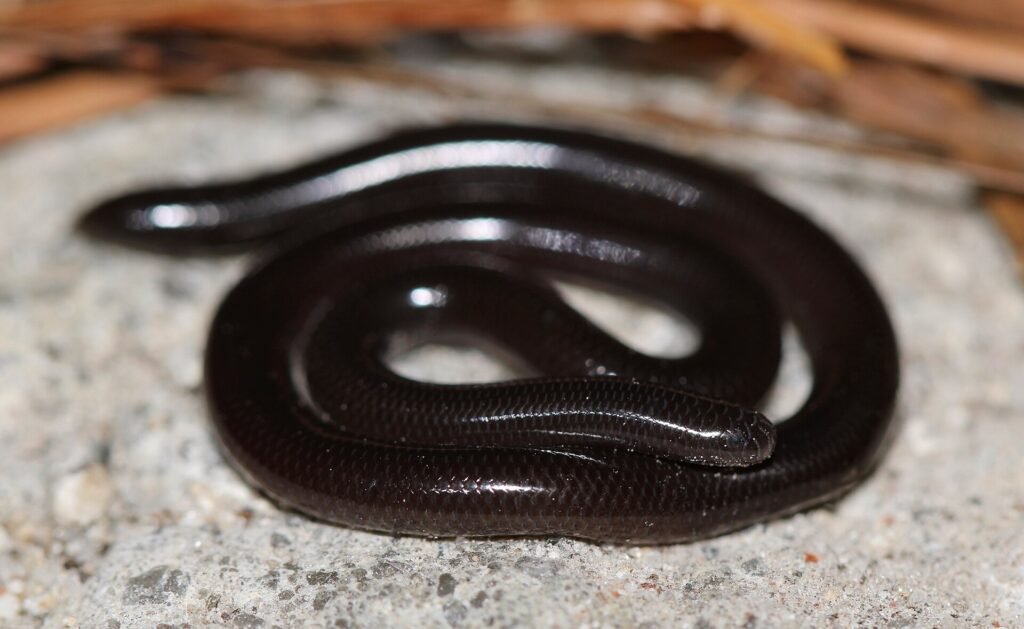
| Brahminy blind snake (Indotyphlops braminus) | Garden soil and potted plants on all main islands; introduced | None; the size of an earthworm, toothless, non-venomous |
| Yellow-bellied sea snake (Hydrophis platurus) | Open Pacific; very rare sightings in Hawaiian waters or washed onto a beach | Venomous but almost never encountered and not aggressive |
| Brown tree snake (Boiga irregularis) | Not established; occasionally intercepted at airports and ports from Guam | Mildly venomous; the species authorities most fear establishing |
| Pet snakes (ball pythons, corn snakes, boas) | Illegal to own; occasionally found abandoned and removed by the state | Non-venomous; isolated individuals, not wild populations |
The Brahminy blind snake
If anyone tells you they saw a snake in a Hawaiian garden, this is almost certainly what they saw. The Brahminy blind snake looks like a shiny dark earthworm, grows to around fifteen centimetres, and lives in damp soil eating ant and termite larvae. It is believed to have arrived in the soil of imported plants from Asia in the 1930s and is now found on all the main islands. It has no venom and cannot bite a person; it is also entirely female and reproduces without mating, which is how a single stowaway founded the whole population.
The yellow-bellied sea snake
This is the most widely distributed snake on earth and lives its whole life at sea across the tropical Pacific. It carries a potent venom, but it is sluggish, has a tiny mouth and no interest in people. Sightings in Hawaiian waters are rare and usually involve a sick or dead animal washed onto a beach after a storm or a warm-water event. If you see one, do not touch it and report it to lifeguards or the Department of Land and Natural Resources.
The brown tree snake threat
The species that keeps Hawaiian biologists awake at night is the brown tree snake, which devastated Guam’s native birds after arriving as a stowaway. Hawaii has intercepted a handful over the decades, typically in military or commercial cargo from Guam, and none has established. Inspections of aircraft and cargo from Guam and trained detector dogs are part of the reason.
Why does Hawaii have no snakes?
Geography did most of the work. The Hawaiian Islands rose from the ocean floor more than 3,000 kilometres from the nearest continent, and reptiles do not cross that kind of open water. Every land animal that colonised the islands arrived by wind, wing or wave, and snakes are poor at all three. The native fauna evolved without any snake predator, which is exactly why an introduction would be so damaging to ground-nesting birds and other wildlife.
Law finished the job. It is illegal to bring, own or transport snakes in Hawaii, with penalties that can reach a six-figure fine and prison time for deliberate smuggling. The Hawaii Department of Agriculture runs an amnesty programme that lets anyone surrender an illegal pet snake with no questions asked, and it publishes a pest hotline for sightings. These rules are the reason the handful of pythons and corn snakes found loose each year never become populations.
What should you do if you see a snake in Hawaii?
Because every snake sighting matters to the state, you are asked to act even when the animal is harmless. The steps are simple.
- Do not try to catch or kill it unless it is clearly a blind snake in garden soil. Keep it in sight from a safe distance if you can.
- Note where you are, the time, and what the snake looked like; a photo from a distance helps.
- Call the Hawaii Department of Agriculture pest hotline, which is listed on the department’s website, or dial 911 if the snake is in a public place and you cannot reach the hotline.
- If you were bitten by anything other than a blind snake, wash the wound, keep the limb still and get medical attention promptly so the animal can be identified.
- If you have brought a snake to Hawaii yourself, use the amnesty programme rather than releasing it; release is a serious offence and an ecological disaster.
If you are curious how an island without snakes compares to islands with them, our guides to snakes in Aruba and snakes in Bali show two very different pictures. New Zealand is the other major snake-free destination on the Pacific map, though its ocean wildlife is a different story, as sharks in New Zealand explains.
Hawaiian wildlife that actually deserves your attention
With snakes off the list, these are the animals and hazards that send visitors to clinics on the islands.
Box jellyfish and Portuguese man o’ war
Box jellyfish arrive on Oahu’s south and leeward shores, including Waikiki, Ala Moana and Hanauma Bay, on a predictable cycle roughly eight to ten days after each full moon. Lifeguards post warning signs on those days, and Honolulu’s ocean safety services publish the expected dates. Portuguese man o’ war blow onto windward beaches whenever the trade winds are strong. Both deliver painful stings; rinse with seawater or vinegar, remove tentacles with a card or tweezers, and apply heat. Seek help for breathing difficulty or a sting on the face.
Sharks
Tiger sharks live around all the islands and are the species involved in most Hawaiian bites, which are rare but widely reported. Risk is higher in murky water after rain, near river mouths, at dawn and dusk, and on Maui’s south and west coasts in autumn. Swim at lifeguarded beaches, heed closures, and avoid the water when it is brown from runoff.
Centipedes
The large Vietnamese centipede is common across the islands and delivers a very painful bite, usually when someone rolls onto one in bed at a rustic rental or picks up firewood. Shake out shoes and bedding when camping, and seek care if swelling is severe.
Leptospirosis in freshwater
Hawaii’s streams and waterfall pools can carry leptospira bacteria from animal urine. Avoid swimming in freshwater with open cuts, do not drink stream water, and see a doctor if you develop flu-like symptoms within a few weeks of a freshwater swim.
Wild pigs, cattle and feral animals
Feral pigs roam forest trails on every island and can charge if cornered with piglets. Give them space. Mongooses, feral cats and chickens are everywhere and harmless, though mongoose and cat faeces are a reason to keep children’s hands clean at picnic sites.
The sun, the surf and the lava
Sunburn, dehydration, rip currents and shore break injuries make up the bulk of Hawaii’s visitor emergencies. On the Big Island, hiking near active lava flows and the volcanic haze known as vog add hazards that have nothing to do with wildlife. Follow Hawaii Volcanoes National Park advisories and ocean safety flags.
Practical safety tips for a snake-free but wild Hawaii
- Check the box jellyfish calendar for Oahu before planning beach days around the full moon.
- Swim at lifeguarded beaches, obey posted warnings and stay out of murky water near stream mouths.
- Shake out shoes, towels and sleeping bags when camping or staying in rural rentals.
- Keep cuts covered and out of freshwater streams and pools.
- Carry reef-safe sunscreen, water and a hat on every hike, and start early to avoid the heat.
- Never bring a pet reptile to the islands, even for a short stay; it is illegal and the fines are severe.
- Keep a small kit with vinegar sachets or sting spray, tweezers, antiseptic and plasters in your beach bag.
- Save 911 in your phone; it works on every island for police, fire and ambulance.
Insurance and medical care in Hawaii
Hawaii is part of the United States, so medical care is excellent and expensive. Visitors from outside the US should carry travel insurance with medical cover, and even domestic travellers should check that their health plan covers emergency care out of state. Major hospitals are in Honolulu, with smaller facilities on Maui, Kauai and the Big Island; remote areas such as Hana or the Napali Coast can be hours from a hospital. Families with young children will find our list of things to do in Hawaii with kids useful for planning days that keep everyone safe and entertained.
Frequently Asked Questions
Are there really no snakes in Hawaii at all?
There are no wild land snakes. The only established snake is the tiny, harmless Brahminy blind snake, which lives in garden soil and is often mistaken for a worm. Yellow-bellied sea snakes very occasionally drift into Hawaiian waters, and the occasional illegal pet is found loose, but there is no breeding population of any true snake.
Why is it illegal to own a snake in Hawaii?
Hawaii’s native birds and ecosystems evolved without snake predators, so an introduced species could cause the kind of damage the brown tree snake did on Guam. The state bans snakes as pets, inspects incoming cargo and runs an amnesty programme for anyone who wants to surrender one without penalty.
Can I be bitten by a sea snake in Hawaii?
It is extraordinarily unlikely. Yellow-bellied sea snakes are rarely seen in Hawaiian waters, are not aggressive and have small mouths. If you find one washed up, do not touch it and report it to lifeguards or the Department of Land and Natural Resources.
What is the most dangerous animal in Hawaii?
Measured by how many people it hurts, the box jellyfish on Oahu and the Portuguese man o’ war on windward beaches come first, followed by centipedes on land. Shark bites are rare but serious; swim at lifeguarded beaches and avoid murky water to reduce the risk.
Is it safe to hike in Hawaii without worrying about snakes?
Yes. Hawaii is one of the few tropical places where snakes are not a trail hazard at all. Your real trail concerns are heat, flash floods in narrow valleys, slippery rock, feral pigs and leptospirosis in stream crossings.
Bottom line
Snakes in Hawaii are a non-issue. The islands have no wild land snakes, the one established species is a harmless worm-sized burrower, and the state’s biosecurity rules exist precisely to keep things that way. Spend the caution you would have used on snakes on the ocean instead: check the jellyfish calendar, swim between the flags, respect shark advisories and keep cuts out of freshwater streams. Do that, and Hawaii is as safe a wildlife destination as the tropics offer.