For most tourists, the realistic risk of a dangerous bear encounter in Canada’s national parks is very low. Millions of people visit Banff, Jasper, Yoho, Kootenay, Waterton Lakes, Pacific Rim, Gros Morne and the rest of the system every year, and the number who are injured by a bear in a typical year can be counted on one hand, often with none at all. Seeing a bear is quite likely, especially in the Rocky Mountain parks in late spring and early autumn. Being hurt by one is not.
That said, bears in Canada’s national parks are wild, large and occasionally lethal, and the parks are honest about it. Parks Canada closes trails, imposes group-size rules and sometimes shuts whole valleys when a bear is behaving unpredictably. The rare serious incidents, including the widely reported fatal grizzly attack on two experienced hikers in the Banff backcountry in 2023, almost always involve remote terrain, surprise encounters or a bear defending food or cubs.
This guide names the three bear species you could meet, explains where and when encounters happen, gives a straight assessment of the danger, and lays out the habits that Parks Canada, provincial wildlife agencies and backcountry guides actually use. It also covers the other animals that injure more tourists than bears do.
Contents
- Which Bear Species Live in Canada's National Parks?
- Bear Species at a Glance
- Where and When Are Encounters Most Likely?
- How Dangerous Are Bears, Honestly?
- Practical Safety Tips From Parks Canada and Guides
- What to Do if You Meet a Bear
- Emergency Response and Insurance
- Other Wildlife Worth Knowing About
- How Bear Risk Compares With Other Wildlife Destinations
- Frequently Asked Questions
- Bottom Line
Which Bear Species Live in Canada’s National Parks?
American black bear (Ursus americanus)
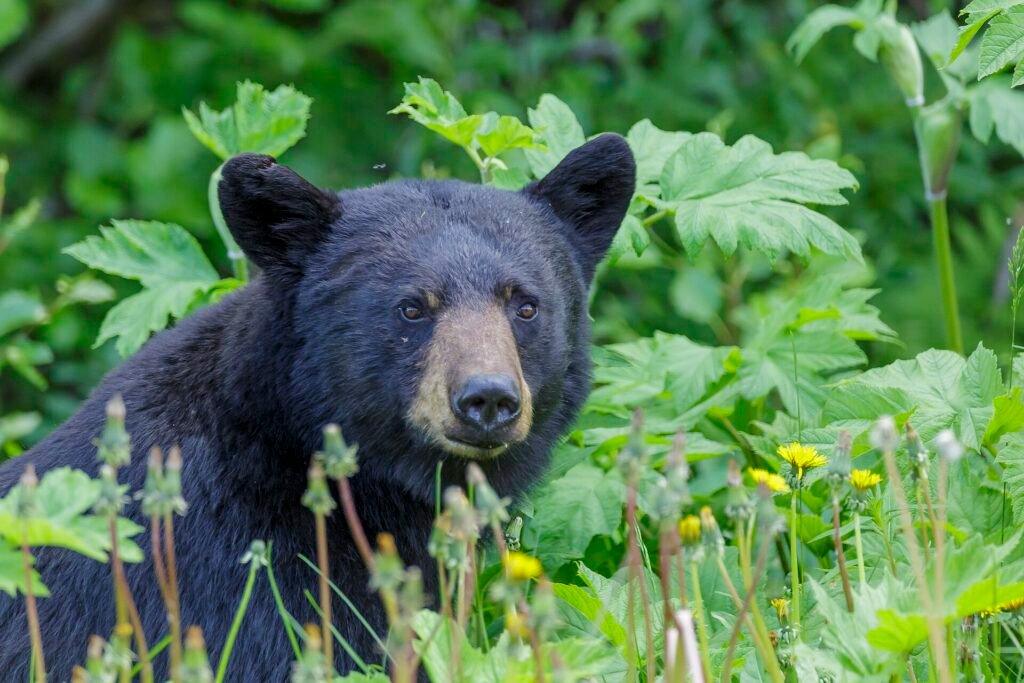
The most widespread bear in Canada, present in almost every national park from Pacific Rim on Vancouver Island to Cape Breton Highlands in Nova Scotia and Terra Nova in Newfoundland. Despite the name, black bears can be brown, cinnamon or blond. Adults typically weigh 60 to 250 kilograms. Black bears are usually shy, climb trees well and are responsible for most roadside sightings in Banff and Jasper.
Grizzly bear (Ursus arctos horribilis)
The grizzly, a North American brown bear, lives in western and northern Canada. In the national park system you will find them in Banff, Jasper, Yoho, Kootenay, Waterton Lakes, Glacier (British Columbia), Mount Revelstoke, Kluane, Nahanni, Ivvavik and the northern Yukon parks. Grizzlies have a shoulder hump, a dished face and long claws, and large males can exceed 300 kilograms. They are more likely than black bears to defend themselves aggressively when surprised, which is why most serious injuries in the mountain parks involve grizzlies.
Polar bear (Ursus maritimus)
Polar bears live along Canada’s Arctic coast and Hudson Bay. The national parks where tourists can realistically encounter them are Wapusk near Churchill, Manitoba, Torngat Mountains in northern Labrador, and the Nunavut parks of Auyuittuq, Sirmilik and Quttinirpaaq. Unlike black bears and grizzlies, polar bears may view people as prey. Visits to these parks are tightly managed; Torngat, for example, requires armed Inuit bear guards for every group.
Bear Species at a Glance
| Species | Where found in national parks | Risk to visitors |
|---|---|---|
| Black bear | Nearly all parks coast to coast, including Banff, Jasper, Pacific Rim, Riding Mountain, La Mauricie, Fundy, Cape Breton Highlands | Low; most encounters end with the bear leaving. Food-conditioned bears are the exception |
| Grizzly bear | Rocky Mountain parks (Banff, Jasper, Yoho, Kootenay, Waterton), Glacier and Revelstoke, Kluane, Nahanni, Yukon and NWT parks | Low overall, but the species behind most serious injuries; surprise encounters on trails are the main trigger |
| Polar bear | Wapusk, Torngat Mountains, Auyuittuq, Sirmilik, Quttinirpaaq, Ivvavik coast | High if unmanaged; visits require guides or bear guards and are rarely independent |
Where and When Are Encounters Most Likely?
Bear activity follows the calendar. Bears emerge from dens between March and May, hungry and often near valley floors where the snow melts first. Early summer brings them to roadsides for dandelions and fresh grass, which is why the Bow Valley Parkway near Banff and the Icefields Parkway between Lake Louise and Jasper produce so many “bear jams”. Late July to September is buffaloberry season in the Rockies, when grizzlies feed intensely along trails and the Parks Canada closures multiply.
Trails and areas with regular restrictions
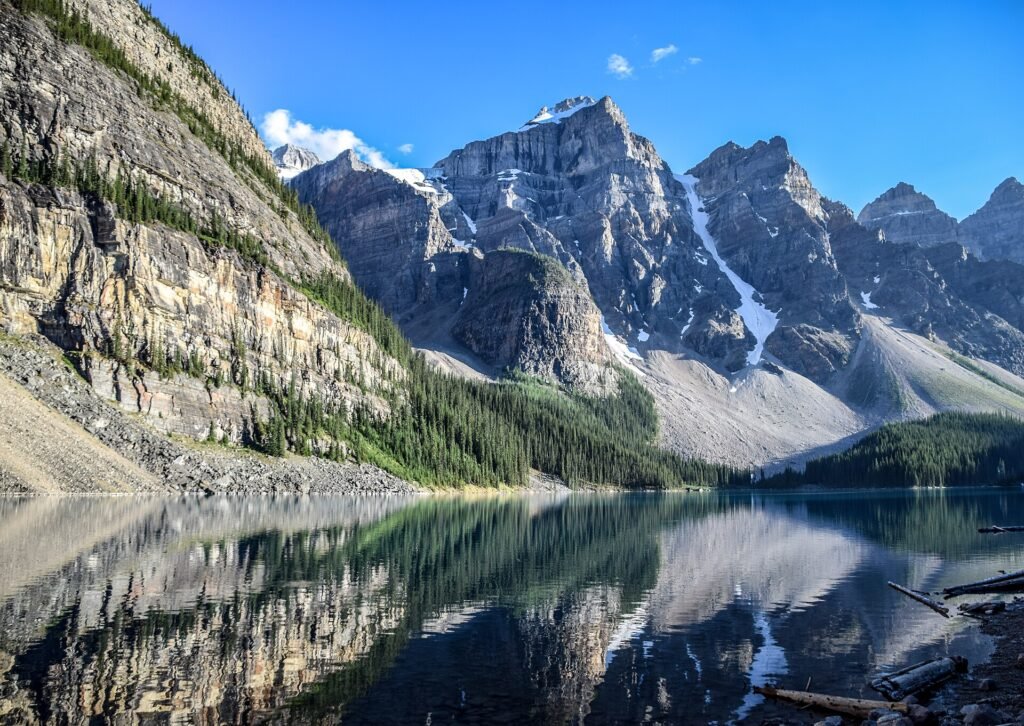
- Lake Louise and Moraine Lake area: several popular trails, including the Larch Valley and Paradise Valley routes, carry a legal minimum group size of four hikers during grizzly season.
- Jasper’s Maligne Valley: Bald Hills and the Skyline Trail are prime grizzly habitat.
How Dangerous Are Bears, Honestly?
Fatal bear attacks across the whole of North America average only a few per year, and Canada’s share of that is small. Parks Canada’s own messaging is that the chance of being injured by a bear is extremely low and that most bears want nothing to do with you. Black bears, in particular, almost always retreat. Grizzlies are more defensive but still avoid people in the vast majority of encounters.
The exception is a bear that has learned to associate humans with food. A bear that has raided a cooler or a campsite once will keep trying, and that is the animal most likely to injure someone. It is also the animal most likely to be destroyed by park staff, which is why “a fed bear is a dead bear” appears on signs everywhere.
Practical Safety Tips From Parks Canada and Guides
- Carry bear spray and know how to use it. Buy it in Canada (it cannot go in airline cabin baggage), keep it in a holster on your hip or chest, not in your pack, and practise removing the safety clip. It is proven effective at stopping charges.
- Make noise. Talk, sing or call out, especially near streams, on blind corners and in dense brush. Bear bells are widely regarded as too quiet to be useful; your voice is better.
- Hike in groups. Groups of four or more are rarely attacked and are mandatory on some trails in grizzly season.
- Stay on marked trails and avoid dawn and dusk in high-use bear areas.
- Store food properly. Use the bear-proof lockers at front-country campgrounds and the food cables or canisters at backcountry sites. Never keep food, toothpaste or scented items in a tent.
- Never approach a bear for a photo, and never stop in a way that blocks a road for a bear jam. Parks Canada asks you to stay in your vehicle and keep moving.
- Respect closures. Fines for entering a closed area are substantial, and the closure exists because a bear is there.
What to Do if You Meet a Bear
The right response depends on what the bear is doing, not just what species it is. Parks Canada’s guidance boils down to the following.
The bear has not noticed you
Back away quietly the way you came, keeping an eye on the bear. Do not run and do not shout. Give it a wide berth and let it carry on.
The bear has noticed you but is calm
Talk in a low, steady voice so it knows you are human. Ready your bear spray. Back away slowly. If it follows, stop, stand your ground and make yourself look large by raising your arms or jacket.
The bear charges
Most charges are bluffs that stop short. Stand your ground and discharge bear spray when the bear is within roughly ten metres, aiming slightly downward so the cloud sits between you. Running triggers a chase you will lose; bears cover ground faster than a sprinter.
Contact is made
- Defensive attack (surprised bear, cubs or carcass nearby, usually a grizzly): play dead. Lie face down, legs spread, hands clasped behind your neck, pack on. Stay still until the bear has left the area for several minutes.
- Predatory attack (the bear stalks you, follows persistently, or attacks at night in a tent, more often a black bear): fight back with everything you have, aiming for the face and nose.
Emergency Response and Insurance
Dial 911 for emergencies across Canada; in the mountain parks the call is routed to Parks Canada dispatch and visitor safety specialists who run mountain rescue. Mobile coverage is patchy in the backcountry, so a satellite messenger or personal locator beacon is a sensible investment for multi-day trips. Report every bear encounter, even a sighting, to the nearest visitor centre or park staff; that information drives closures that protect the next hiker.
Visitors are not covered by Canada’s public healthcare, and a helicopter evacuation plus hospital treatment can run to tens of thousands of dollars. Make sure your travel insurance covers hiking at altitude and search and rescue, and read the exclusions before you rely on it. If you are new to planning for health and emergency cover abroad, our guide to staying safe when traveling abroad walks through what a good policy should include.
Other Wildlife Worth Knowing About
Elk
Elk wander the Banff and Jasper townsites and injure more people in the parks than bears. Bulls are aggressive in the September and October rut; cows defend calves in May and June. Keep at least 30 metres away, more if the animal is agitated.
Moose
Common in Jasper, Riding Mountain, Gros Morne and Cape Breton Highlands. A moose that pins its ears back and lowers its head is about to charge. Put a tree or vehicle between you and it. Moose are also the most dangerous animal to hit on a night-time highway.
Ticks
Lyme disease is spreading in eastern and central Canada and blacklegged ticks are now found in parts of Ontario, Quebec, the Maritimes and southern British Columbia. Check yourself after hikes and consult the Public Health Agency of Canada’s tick maps for the region you are visiting.
How Bear Risk Compares With Other Wildlife Destinations
Bears generate more anxiety than most animals because they are large and familiar from films, but the numbers tell a calmer story. Snakebite in tropical destinations, covered in our guide on snakes in Costa Rica, is a more common medical issue for travellers than bear attacks in Canada, and even that is uncommon. Marine hazards get the same treatment in our piece on sharks in New Zealand: the animal is real, the danger is small, and simple habits make it smaller.
Frequently Asked Questions
How likely am I to see a bear in Banff or Jasper?
Quite likely if you spend a few days in the parks between May and October, especially driving the Bow Valley Parkway, the Icefields Parkway or the Maligne Lake Road in the early morning or evening. Most sightings are of black bears grazing at the roadside, and the correct response is to stay in your car and keep driving.
Do I really need bear spray for a short day hike?
Parks Canada recommends it for any trail in bear country, including popular ones. Many of the serious incidents in the mountain parks involved people without spray. It costs about the same as a restaurant meal and can be rented in Banff, Jasper and Canmore if you do not want to buy.
Can I visit Churchill to see polar bears safely?
Yes. Churchill’s polar bear tourism in October and November runs on purpose-built tundra vehicles with experienced guides, and the town has a dedicated bear alert programme. Walking around outside town on your own is a different matter and is strongly discouraged.
What is the group-of-four rule?
On certain trails in the Lake Louise and Moraine Lake area, Parks Canada legally requires hikers to travel in tight groups of at least four during the summer and autumn grizzly season. The requirement is posted at trailheads and on the park’s trail report, and solo hikers often join up at the trailhead to comply.
Bottom Line
Bears are part of what makes Canada’s national parks extraordinary, and for the ordinary tourist they are a highlight rather than a hazard. Injuries are rare, fatalities rarer still, and almost every serious incident involves a surprise in remote terrain or food that was left where it should not have been. Carry spray, make noise, travel in a group, store food properly and obey closures, and the most dramatic bear moment of your trip will be a distant grizzly turning over rocks in a meadow while you watch from a safe, legal distance.